 EN
EN

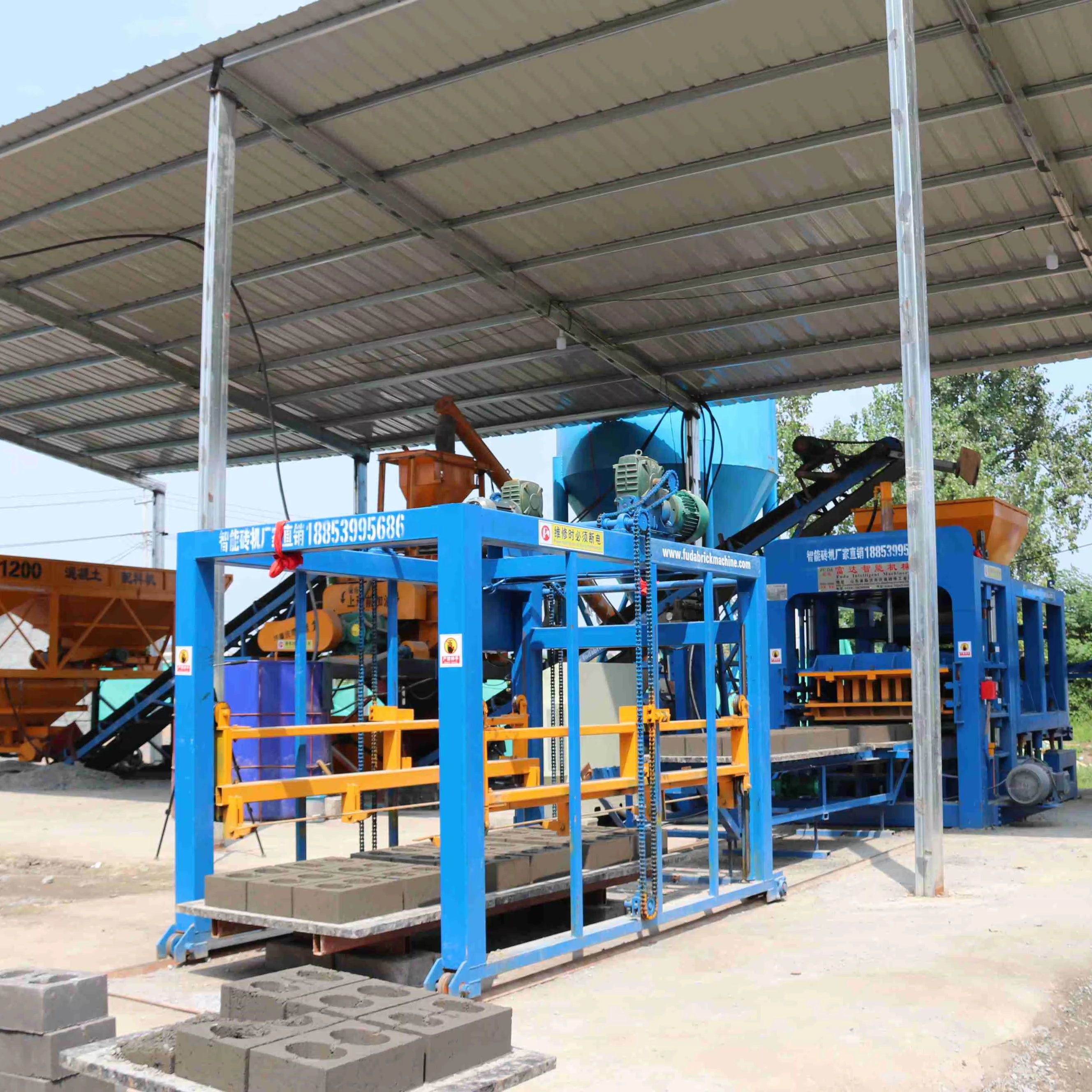
Understanding the Mobile Block Making Machine and Its Core Function
Construction logistics get a major boost with mobile block making machines that bring the production right to where work is happening. These portable units, many of which can be towed behind trucks, function almost like mini factories on wheels mixing cement, aggregates, and water to create concrete blocks whenever needed. The big difference compared to traditional setups is these machines cut out the whole factory manufacturing step plus all that long haul trucking across town. What makes them so useful? Well, their modular nature means they can handle pretty much any location thrown at them whether it's tight city streets or out in the middle of nowhere building roads. A recent industry report from 2025 showed something interesting too: contractors who switched to mobile systems saved around 18 percent on fuel costs without sacrificing how much product they could actually produce each day.
On-Site Production Eliminating Reliance on External Block Suppliers
When blocks are produced right where they're needed, construction crews aren't tied down by outside suppliers or stuck waiting for deliveries according to someone else's schedule. The old way of doing things meant placing orders weeks ahead of time, which left construction sites exposed when storms rolled in, workers went on strike, or shipments got backed up somewhere along the supply chain. Now with manufacturing happening onsite, project managers have much more flexibility. They can switch between different block types, tweak how many they need each day, even experiment with new concrete mixes depending on what actually shows up at the site. And there's real money saved too – studies indicate around a fifth less wasted materials and nearly a third drop in storage expenses simply because nobody has to guess high just to be safe anymore with this local production method.
Mobility and Rapid Deployment Across Project Phases and Locations
These compact block makers take up space equivalent to around 30 square meters max, so they don't need any permanent concrete bases. What's more, moving them from one location to another takes less than three hours most of the time. That kind of mobility works really well when dealing with projects that happen in stages or across multiple areas like housing estates or road widening projects. Take a look at what happens on actual construction sites: one machine might be churning out those roadside kerb stones first thing in the morning, then packed up and driven about 15 kilometers away later same day to start making partition blocks for some new houses going up nearby. Contractors who have switched to these mobile systems report finishing their work roughly 40 percent faster when managing several different sites at once compared to traditional stationary equipment setups.
Reducing Labor Costs Through Automation in Mobile Block Production
High Manual Labor Dependency in Traditional Block Manufacturing
Back in the day, making blocks was all hands on deck with teams ranging from around 20 to maybe 30 folks who had to mix everything by hand, shape it into molds, then wait for them to cure. The whole shebang cost a fortune in wages since so many people were needed just to keep things moving. And let's face it, quality control was hit or miss. According to MyTechMachine's report from last year, roughly seven out of ten times when blocks ended up misshapen after stacking, it was because someone messed up somewhere along the line. Production numbers? Well, most factories could only turn out between four hundred and five hundred blocks each shift before running into problems with how they lined everything up and moved those heavy blocks around without damaging them.
How Automatic Block Making Machines Cut Labor Needs by Up to 70%
Modern mobile machines automate the entire workflow—from batching to demolding—requiring only a 3—5 person crew to produce 1,500—2,000 precision-grade blocks per hour. Robotic palletizing and PLC-controlled systems reduce labor dependency by 68—72% while ensuring ±1mm dimensional accuracy (Sanlian Block Machinery 2024).
Operational Simplicity: Minimal Training Required for Machine Operators
The semi-automatic control systems make it much easier for things like material feeding and block ejection. Most people who have at least some technical background find they can get up to speed pretty quickly on these machines. Training usually takes around 8 to 10 hours because the smart systems handle all the complicated stuff like managing vibrations, controlling compression forces, and timing the curing process. According to research from last year, about 8 out of 10 new operators hit their production targets right in the first week they started working. This means companies don't need to hire as many specialists since regular workers can pick it up so fast.
Case Study: Small-Scale Producer Cuts Workforce by 60% Without Output Loss
A Ghanaian construction firm replaced its 15-worker manual team with two mobile block machines operated by six staff. The results were transformative:
- Monthly labor savings: $11,500
- Production consistency: Reject rates dropped from 12% to under 3%
- Output capacity: Increased from 4,000 to 7,200 blocks/day
This case demonstrates how automated mobile units enable smaller teams to surpass manual operations in both efficiency and product quality.
Cutting Transportation Costs with On-Demand, On-Site Block Manufacturing
The Financial and Logistical Burden of Transporting Pre-Made Concrete Blocks
Transporting pre-cast concrete blocks involves moving 4—6 tons per truckload, with delivery costs consuming up to 35% of total material budgets in remote regions (2024 Construction Logistics Report). Additional expenses include fuel surcharges, vehicle rentals, and labor for loading/unloading. Transit damage averages 12% for standard 8-inch blocks, leading to delays and reorders.
Lower Fuel, Vehicle, and Handling Costs Through Localized Production
With a mobile block making machine operating within 50 meters of the build zone, contractors eliminate long-haul logistics entirely. Key cost savings include:
- Fuel: Avoiding diesel truck travel (avg. $3.20/mile)
- Handling fees: Cutting third-party loading/unloading charges ($18—$25/ton)
- Equipment rental: Eliminating flatbed truck leases ($450/day)
Localized production also reduces idle labor time—workers spend 73% fewer hours coordinating deliveries compared to traditional supply chains.
Reduced Transportation Emissions and Project Carbon Footprint
On-site manufacturing slashes diesel consumption by 6,200 liters annually for mid-sized projects, reducing CO₂ emissions by 16.4 metric tons—equivalent to planting 380 mature trees. Contractors adopting on-demand production models report 22% faster project completion due to eliminated wait times for deliveries.
Mobile vs Stationary: Cost, Flexibility, and Long-Term ROI Comparison
Operating Cost Comparison: Mobile vs Stationary Block Making Machines
The operating costs for mobile units tend to be much lower because they use less energy and don't need as much infrastructure support. Stationary systems typically guzzle around 30 to 45 kW per hour and come with monthly maintenance bills ranging from $800 to $1,200 according to industry standards. Mobile equipment, on the other hand, runs at about 18 to 22 kW per hour with maintenance expenses generally between $350 and $550 each month, as noted in recent studies from the 2024 Mobile Construction Equipment Report. When it comes to setup time, there's a big difference too. Traditional stationary plants take anywhere from three to six weeks just for the foundation work alone. Meanwhile, mobile units can be up and running within 48 hours. This saves rural construction projects anywhere from $15,000 to $30,000 that would otherwise go toward preparing the site for traditional installations.
| Cost Factor | Mobile Machine | Stationary Machine |
|---|---|---|
| Energy Consumption | 18—22 kW/hr | 30—45 kW/hr |
| Monthly Maintenance | $350—$550 | $800—$1,200 |
| Labor Needs | 1—2 operators | 3—4 operators + technicians |
Project Scalability and Site Adaptability of Mobile Units
For long stretches of work like road maintenance across many miles, mobile machinery really shines because they can handle operations at multiple sites simultaneously. Field workers have noticed equipment gets used around 83 percent more often when working on medium sized projects between 10 thousand and 200 thousand blocks with mobile setups. The reason? These systems can be moved quickly from one location to another as needed. Compared to traditional fixed installations, mobile units offer much better flexibility since additional machines can simply be brought in when demand increases. This avoids those frustrating extra costs that come with stationary equipment sitting idle most of the time, typically running anywhere from two to five cents per block wasted.
Upfront Investment vs Long-Term Labor and Transportation Savings
Mobile machines have lower initial costs ($2.5k—$10k vs. $15k—$50k+ for stationary models), with break-even achieved in 18—24 months for projects requiring 100k blocks. These gains come from eliminating:
- $1.2k—$2k/month in transportation
- 35—40% labor overhead from reduced material handling
- $740—$1,100/day in delay-related penalties
For large-scale, long-duration projects (>200k blocks), stationary systems offer better economies of scale but require multi-year commitments to justify their higher capital and automation costs.
FAQ
What is a mobile block making machine?
A mobile block making machine is a portable device used to produce concrete blocks directly at construction sites, eliminating the need for off-site block manufacturing and transportation.
How do mobile block making machines benefit construction logistics?
They reduce transportation costs, increase flexibility in block production, save on fuel, and allow for on-demand manufacturing, enhancing overall efficiency at construction sites.
What are the labor savings associated with mobile block making machines?
Mobile machines automate much of the block production process, reducing labor dependency by up to 70% and requiring fewer operators compared to traditional methods.
Do mobile block making machines reduce project emissions?
Yes, they significantly cut down transportation emissions by producing blocks on-site, thus reducing diesel consumption and the overall carbon footprint of the project.
Table of Contents
- Understanding the Mobile Block Making Machine and Its Core Function
- On-Site Production Eliminating Reliance on External Block Suppliers
- Mobility and Rapid Deployment Across Project Phases and Locations
- Reducing Labor Costs Through Automation in Mobile Block Production
- Cutting Transportation Costs with On-Demand, On-Site Block Manufacturing
- Mobile vs Stationary: Cost, Flexibility, and Long-Term ROI Comparison
- FAQ