 EN
EN
Core Components and Integrated Workflow of Fully Automatic Brick Making Machines
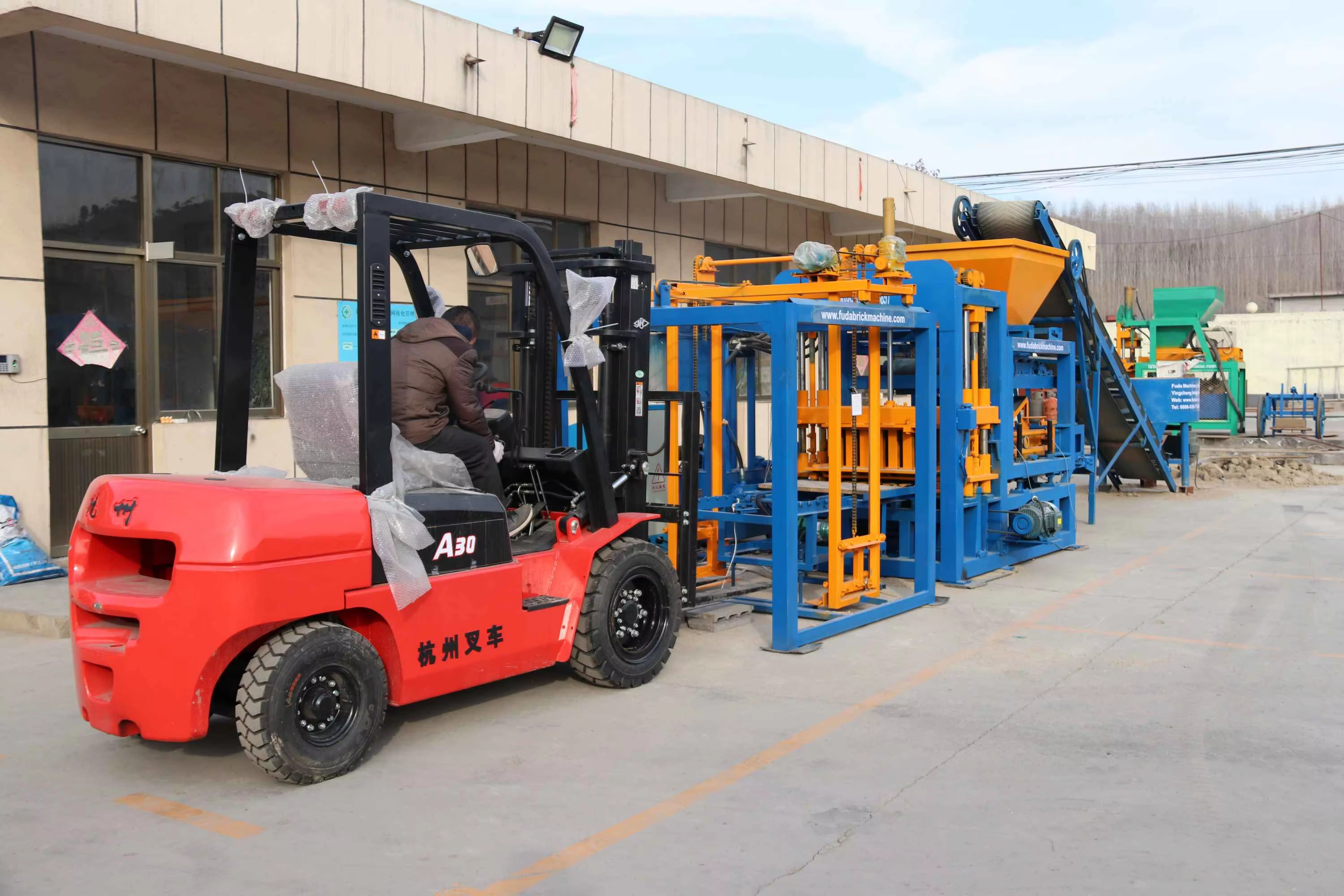
What makes an automatic hydraulic fly ash brick maker so sophisticated (and expensive) comes down to how well four main parts work together. First off, industrial mixers take care of blending fly ash, cement, and other materials into consistent batches. These machines have smart moisture controls that adjust automatically based on what's needed for each batch. Once mixed properly, the material moves along to the extrusion stage where special dies shaped with diamonds create those long columns of material with pretty tight tolerances around half a millimeter. Then comes the heavy lifting part where hydraulic presses crank up between 2,000 and 3,500 pounds per square inch to compact everything into dense bricks. Smart de-molding systems come into play here too, using vibrations and carefully controlled tilting motions to get those bricks out without any cracks forming. Everything ties back to a central control system that lets operators tweak pressure settings, adjust speeds, and monitor moisture levels in real time. This kind of coordination is what keeps quality consistent from one production run to the next.
End-to-End Process Integration: From Raw Material Feeding to Stacking and Packaging
Modern fully automated brick manufacturing facilities run as continuous operations without breaks. The robotic loading systems measure out ingredients with incredible accuracy down to the gram level before feeding them into production. Once formed, the bricks travel along conveyors into special infrared curing rooms. These chambers adjust both heat and moisture levels on the fly to speed up how fast the bricks harden. What takes days using traditional methods happens here in about 48 hours instead. At the end of the line, vacuum grippers stack each brick onto wooden pallets with near perfect alignment, then wrap everything tightly in protective plastic film against the elements. By cutting down on manual handling from around 14 times per batch to only 3, these plants can operate nonstop day after day, producing roughly 4,500 bricks every hour with defects occurring less than 1% of the time.
Quantifiable Efficiency Gains from Full Automation
Throughput Acceleration: 3,000–6,000 Bricks/Hour vs. Semi-Automatic Benchmarks
Fully automated lines deliver 3,000–6,000 bricks/hour—tripling the output of semi-automatic systems. Continuous motion, servo-driven extrusion, and zero manual transfer delays sustain peak throughput. This directly lowers per-unit production costs by 40–60% and shortens order-to-delivery timelines by up to 70%.
Enhanced Consistency and Quality: Real-Time Monitoring and Closed-Loop Control
Integrated IoT sensors conduct over 200 quality checks per minute—detecting deviations in dimensions, density, or material composition. Closed-loop controls automatically fine-tune hydraulic pressure (±0.2 PSI) and moisture dosing (±0.5%) during compaction. As a result, defect rates fall to under 0.3%, compared to 5–7% in manual operations—cutting rework, scrap, and customer returns.
Labor Optimization and Workplace Safety: Reduction from 12–15 to 3–5 Skilled Technicians
When companies implement automated systems for feeding, conveying, stacking and packaging operations, they typically see a massive drop in labor requirements. Labor costs can go down around 75%, which means shift teams that used to need 12 to 15 workers now only require 3 to 5 people who know how to handle multiple roles. The real game changer comes in safety improvements. Dangerous jobs like dealing with molds, moving hot materials around, and doing heavy lifting are completely taken out of the equation. This has led to a dramatic reduction in workplace injuries, with some facilities reporting as much as a 92% decrease in incidents that would normally be reported to OSHA. All these savings in both safety costs and payroll expenses usually pay back the investment in those expensive automatic hydraulic fly ash brick making machines somewhere between 12 and 18 months after installation.
Resource Efficiency: Waste Reduction and Precision Material Utilization
Automated brick making systems cut down on wasted resources thanks to their precise control mechanisms. These machines have sensors that keep an eye on things like fly ash levels, cement content, and how wet or dry the aggregates are while they're flowing through the system. This allows for constant adjustments to the mix proportions, pressure applied during compaction, and how much water gets added. According to a study from Ponemon in 2023, this approach can slash raw material waste by around 25 to 30 percent compared to what happens when people do it manually. Traditional brick production often ends up with over 8% rejected bricks because the mix isn't consistent enough, but automated systems manage to get almost everything right the first time around, turning nearly all inputs into products ready for sale. Any extra water or broken bits of material get caught and reused instead of being thrown away, which means lower disposal bills and better treatment of our environment. When companies optimize each kilogram of fly ash or clay they use, their bottom line improves significantly long before they even consider whether the investment in new equipment pays off financially.
Economic Viability: Automatic Hydraulic Fly Ash Brick Making Machine Price and ROI Outlook
Price Range Analysis: $45,000–$120,000 Based on Capacity, Brand, and Automation Level
The price tag for automatic hydraulic fly ash brick makers usually falls somewhere between $45k and $120k. What determines the final number? Well, it mostly comes down to how many bricks the machine can produce each hour, who made it, and just how automated everything is. Machines built specifically for fly ash tend to set folks back around 10 to 20 percent extra compared to regular concrete brick systems. Why? Because they need special mixing chambers and better temperature control throughout the process. But here's the good news: most businesses find that paying a bit more upfront pays off pretty quickly. These machines eat up less raw materials overall, consume far less energy per brick produced, and generate significantly less waste. Plus, the advanced PLC controls constantly tweak the mix of fly ash and cement on the fly, which means no guesswork when it comes to getting the right consistency every single time.
ROI Timeline: Payback in 12–18 Months Driven by Labor Savings, Yield Uplift, and Waste Reduction
Operators typically see their investment pay off within around 12 to 18 months thanks to three main benefits working together. Labor expenses take a big hit when staff goes down from about 12 or 15 people per shift to just 3 to 5 technicians, plus there's almost no downtime from workplace injuries anymore. The machines also produce better results right away with their precise extrusion and hydraulic pressing capabilities, getting first pass yields up over 99 percent which cuts down on rejected products by roughly 18% compared to older semi automatic systems according to recent industry data. Another major plus is how closed loop recycling systems combined with sensors monitoring moisture levels can slash raw material consumption by approximately 22%. When all these improvements are factored in along with consistent production rates exceeding 5,000 bricks per hour, most companies end up saving well over $90k each year on operations alone. That makes investing in automated solutions not just good business sense but something that positions them nicely for whatever comes next in the market.
FAQs
What are the core components of a fully automatic brick-making machine?
The core components include industrial mixers, extrusion systems with diamond-shaped dies, hydraulic presses, and smart de-molding systems. These parts work in tandem, controlled by a central management system, to ensure consistent brick quality.
How does full automation improve brick production?
Full automation increases brick production from 3,000 to 6,000 bricks per hour, reducing production costs by 40-60%. It enhances consistency with real-time monitoring and closed-loop controls, and lowers defect rates to under 0.3%.
What are the economic benefits of an automatic hydraulic fly ash brick making machine?
The machine reduces labor costs by up to 75%, minimizes material waste by 25-30%, and lowers workplace injuries drastically. These savings usually offset the investment cost within 12 to 18 months.
What is the price range for an automatic hydraulic fly ash brick-making machine?
Prices typically range from $45,000 to $120,000, depending on capacity, brand, and level of automation. Machines designed specifically for fly ash may cost 10-20% more due to specialized components.