 EN
EN
How a Semi Automatic Block Making Machine Cuts Labor Requirements by Up to 70%
Automation-driven reduction in manual handling and molding tasks
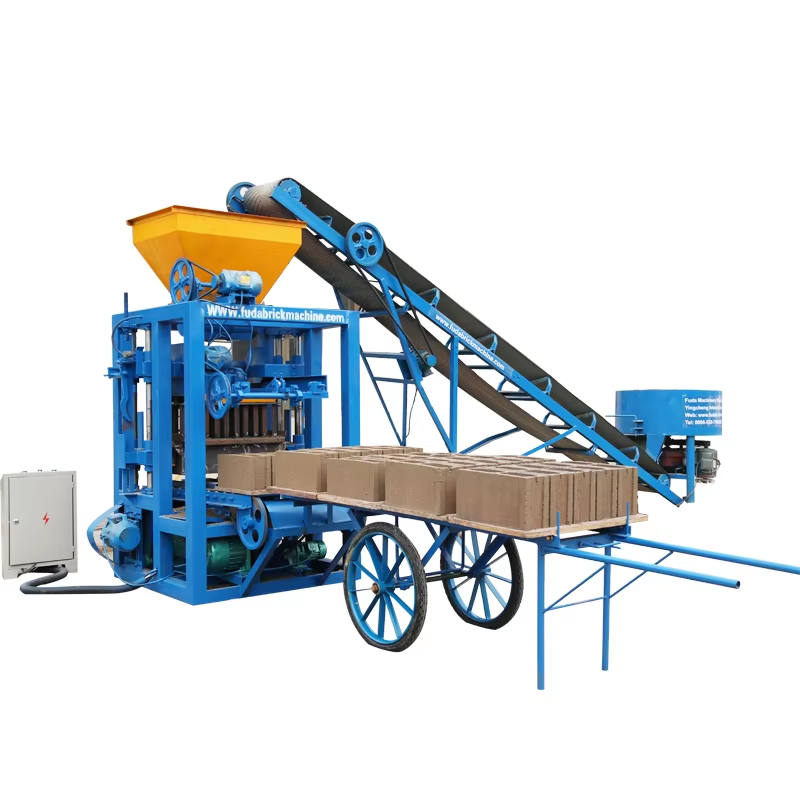
The semi automatic block makers take care of those really tough physical jobs in concrete block manufacturing. Back in the day, workers had to do all the mixing, pouring, and compacting manually, which was no small feat. These newer machines handle the molding and compression work using hydraulic systems instead. What's left for operators is just loading the raw materials into the hopper. Once that's done, the machine gets to work forming blocks at around 800 per hour, needing very little hands on attention from staff. Companies report cutting their labor force down about two thirds when switching from manual to semi automated processes. Plus, taking over those high stress tasks like compaction means fewer workplace injuries and much better consistency between batches of blocks produced.
Labor cost share in block production (25%–35%) and impact of semi-automation
Labor makes up around 25-35% of what it costs to produce blocks, so getting more efficient with workforce management really impacts the bottom line. When facilities switch to semi-automatic equipment, they typically need about 70% fewer workers on hand. This cuts production expenses somewhere between 17.5% and maybe closer to 25% depending on various factors. Take a factory where labor costs currently eat up 30% of the budget. After automation, those costs might fall down to around 9%. That represents a pretty significant 21% drop in overall spending. The money saved isn't just pocket change either. Most businesses start seeing their return on investment within 12 to 18 months, which is actually pretty quick for manufacturing upgrades. What's interesting is how this freed-up capital gets put back into the business. Some companies use it for regular maintenance while others expand production capacity. Either way, these changes help turn traditionally labor intensive processes into something much more streamlined and cost effective over time.
Manual vs. Semi Automatic Block Making Machine: A Labor-Efficiency Comparison
Workforce size, skill level, and cycle time differences
Manual block production relies on intensive labor: workers mix materials, fill molds, and compress blocks using hand levers. This process requires:
- 2+ workers per station (one operator and one helper)
- High physical stamina due to repetitive motion
- Cycle times of 20–30 seconds per block
In contrast, semi-automatic machines use hydraulic or electric systems to streamline production:
- One operator manages feeding, curing, and oversight
- Physical demands are significantly reduced
- Cycle times drop to 8–12 seconds per block
This shift cuts personnel needs by 50–60% while doubling output capacity, improving both productivity and working conditions.
ROI timeline: Balancing upfront investment against labor savings
Labor represents 25–35% of manual production costs. Adopting a semi-automatic system requires an initial investment of $10,000–$50,000 but delivers a payback period of 6–24 months due to labor savings and increased output.
| Cost Factor | Manual Process | Semi-Automatic System |
|---|---|---|
| Daily Output | <2,000 blocks | 4,000–12,000 blocks |
| Labor Costs | 40–60% higher | Optimized logistics |
| Payback Period | N/A | 6–24 months |
For operations producing 5,000+ blocks daily, annual labor savings often exceed $15,000, justifying the transition within two years.
Operational Realities of the Semi Automatic Block Making Machine in Small-Scale Production
Maintaining output quality and consistency with reduced labor input
Semi automatic machines produce blocks that are really dense and dimensionally accurate too, with defects happening only about 1.2% of the time instead of the 12% we see when things are done manually according to industry data from last year. These machines keep everything consistent because they have built in hydraulic presses working alongside carefully timed vibrations throughout the process. Operators still need to watch what's going on though, especially when materials settle down into place or when changing molds between batches. Since there's not so much heavy lifting involved anymore, workers don't get tired as quickly which means fewer mistakes from being worn out. They spend more time checking for quality issues instead of getting their hands dirty with actual molding work all day long.
Training requirements and operator adaptability for semi-automation
Most workers who switch from manual to semi automatic systems need around two to three weeks to get up to speed with things like managing workflows, making adjustments to parameters, and handling basic fixes when something goes wrong. A number of manufacturers have started incorporating augmented reality tools into their training programs, which helps people pick up skills faster through interactive experiences. For smaller operations, this kind of adaptability makes all the difference in staying flexible. Operators can now handle several machines at once while still hitting production targets between 4,000 and 12,000 blocks per day according to recent equipment standards from 2025. What we're seeing here is a real shift in focus from just doing the physical work to understanding logistics better and having some technical know how. This change actually makes sense for keeping the workforce going strong in the long run instead of burning people out with constant heavy lifting.
FAQ
-
What is a semi automatic block making machine?
A semi automatic block making machine is a device that automates the block forming process using hydraulic systems, thereby reducing the need for manual labor. -
How does it impact labor requirements?
It cuts down labor requirements by up to 70%, as fewer workers are needed for tasks like loading materials and overseeing operations. -
What are the cost benefits?
The machine reduces labor costs significantly and provides a faster return on investment by enhancing productivity and decreasing manual workload. -
Is there any training needed for operators?
Yes, operators typically need two to three weeks of training to adapt to semi-automatic systems, and some manufacturers offer augmented reality tools to facilitate this. -
What is the impact on output quality?
The block making machine ensures high-quality output with consistent density and accuracy, minimizing defects compared to manual production.