 EN
EN
Lower Upfront Investment and Stronger ROI for Small-to-Medium Firms
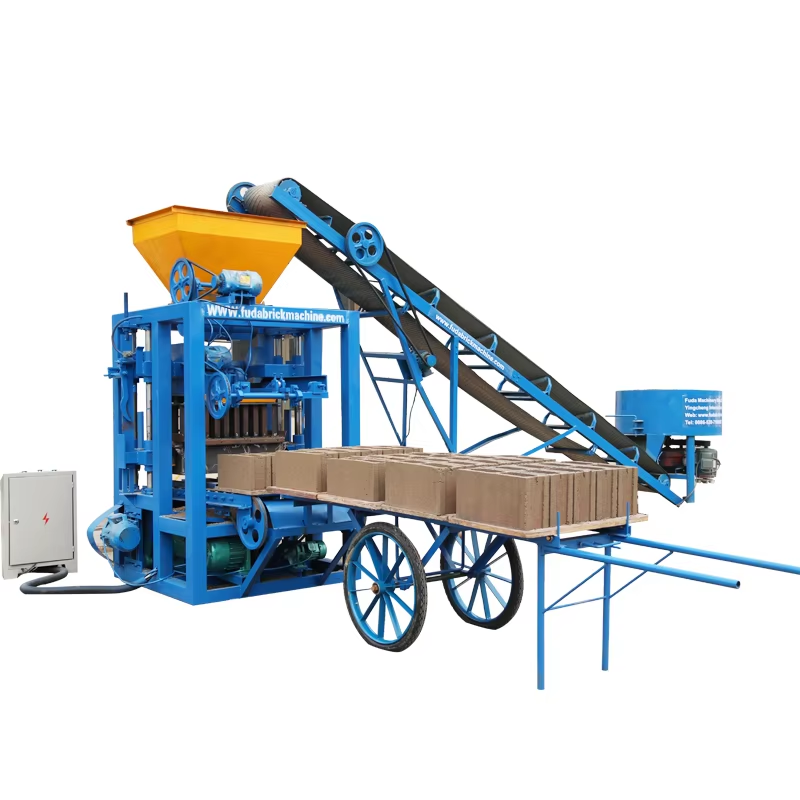
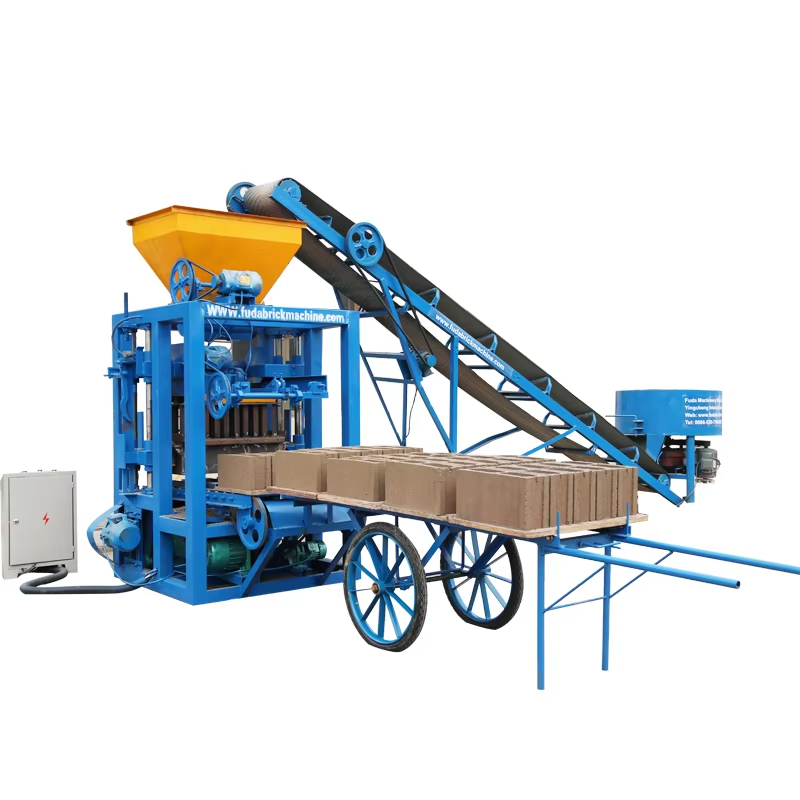
For many local construction companies, semi automatic block makers strike just the right balance between manual work and full blown automation. These machines don't require the huge upfront investment that comes with completely automated systems, costing anywhere from around ten thousand dollars up to fifty grand. That makes them accessible for smaller operations looking to grow without breaking the bank. According to what we've seen in the industry, most businesses start seeing their money back within about eighteen months after purchase. Why? Because these machines cut down on labor needs by roughly half while boosting daily production to somewhere between four thousand and twelve thousand blocks per day. The real benefit here is how this setup allows companies to expand naturally over time. Instead of taking on debt for expensive machinery, owners can take those savings and put them right back into expanding their operations when the timing feels right.
Precision Molding Reduces Cement Waste and Material Costs
The advanced hydraulic compaction process helps achieve pretty uniform block density throughout production runs, which means fewer defects that waste materials and money. When it comes to cement usage, precision dosing makes a real difference too. We're talking about cutting down on spillage somewhere between 40% and maybe even 55% in some cases. For medium sized operations, this translates into savings around the $50k mark each year. There's also the integrated vibration technology that gets rid of those pesky air pockets inside blocks. This simple addition slashes structural problems and saves companies roughly 30% on rework expenses. What really stands out though is how adaptable the whole system is when dealing with different regional materials. Whether working with tough volcanic rock or slippery river gravel found locally, the system keeps producing structurally sound blocks without needing special mix formulations or expensive outside lab tests for every new aggregate source.
Labor Efficiency Without Full Automation Complexity
Semi-automatic block making machines deliver measurable labor advantages while preserving human oversight—a practical fit for local contractors optimizing workflows without overengineering their operations.
Reduced Crew Size: From 8–10 Manual Laborers to 3–4 Trained Operators
Making blocks manually usually needs around 8 to 10 people working together on mixing, shaping, stacking, and letting them cure. The whole thing tends to be pretty inconsistent and takes a real toll on the body. When companies switch to semi-automatic machines, they only need about 3 or 4 trained staff members instead. These folks handle things like feeding materials into the machine, controlling the cycles, and moving finished blocks around. Labor expenses go down by more than half at the same time production jumps up to between 300 and 600 blocks per hour. Employees no longer spend all day doing the same grueling physical work. Instead they focus on monitoring systems and making adjustments as needed. This change cuts down on worker exhaustion, mistakes happen less often, and people stay with the company longer too. What's left of their time gets put towards checking product quality and managing how everything moves around the worksite. All this happens without needing expensive robotic systems either.
Minimal Training Required: Onboarding Semi-Skilled Workers in Under 3 Days
Unlike fully automated systems requiring programming or PLC expertise, semi-automatic models use intuitive levers, dials, and safety interlocks accessible to semi-skilled laborers. Core competencies—material loading consistency, cycle timing, mold pressure adjustment, and jam resolution—are mastered in under 72 hours. Training focuses on four high-impact areas:
- Optimizing vibration duration for target block density
- Adjusting compaction pressure to match local soil or aggregate behavior
- Clearing common material feed obstructions
- Performing daily preventive maintenance
This rapid upskilling cuts onboarding costs by 40% versus automated alternatives. Contractors can flex crew size seasonally, avoiding downtime or premium-rate specialist hires. The hands-on interface also builds operator confidence—ensuring continuity during staff rotations or absences.
Scalable Output Aligned with Local Project Demand
Modular Daily Capacity (800–2,500 Blocks) Matches Small-Scale & Phased Construction
The semi automatic block makers solve a big problem many companies face when using those huge industrial lines that just don't match what's needed on site. These machines come with a modular setup that can produce anywhere from 800 to 2500 blocks each day. That kind of range works really well for small scale housing developments, local infrastructure work, or even bigger projects that happen in phases over time. What makes these systems special is how they handle different demand levels. When business slows down, there's no wasted resources sitting around. And if things pick up suddenly, most setups can boost production within two days flat. Contractors love this because it cuts down on expensive downtime and keeps inventory costs under control. Studies show that fixed capacity operations lose about 28 percent of their material budget to these issues alone. When production matches exactly what needs to be delivered to sites week after week, companies keep their supply chains running smoothly, tie production schedules to payment deadlines, and free up cash that would otherwise get stuck in unused stock piles. This matters a lot for businesses juggling several construction projects at once.
Site-Adapted Flexibility of the Semi-Automatic Block Making Machine
On-Site Curing Integration and Interlock Tolerance Adjustment for Regional Conditions
Semi automatic machines work really well when dealing with different site conditions and materials that vary from place to place. The on site curing systems mean no need to move things around between locations, which cuts down curing time significantly. Instead of waiting 7 to 10 days like usual, projects can be ready in just 3 to 5 days now. That's roughly half the time compared to what people used to do manually. Workers tweak how tight the pieces fit together, usually within about 0.5 to 1.5 millimeters, depending on what's happening with temperature changes, moisture levels causing wood or concrete to swell, or differences in local building materials. This adjustment helps prevent problems in areas where there's lots of humidity, earthquakes happen regularly, or temperatures get extremely hot.
Programmable Logic Controllers (PLCs) allow real-time calibration of vibration frequency (40–70 Hz) and compaction pressure (1500–3000 psi) across diverse cement-sand ratios. As confirmed by 2023 industry data, this adaptability reduces material waste by 18%. Key site-specific features include:
- Moisture-responsive curing: Automatically extends cycles during high-humidity conditions
- Thermal compensation: Adjusts density targets to offset temperature-driven shrinkage or expansion
- Aggregate optimization: Modifies compaction force for locally sourced materials—from volcanic tuff to river gravel
The machine’s modular architecture also supports phased upgrades—such as adding solar-powered curing hoods for remote or off-grid sites—without replacing core components. This site-tuned responsiveness ensures consistent, code-compliant block quality across diverse regional conditions.
Frequently Asked Questions
How do semi-automatic block machines reduce labor costs?
Semi-automatic block machines reduce labor costs by requiring fewer operators compared to manual labor. You only need 3–4 operators, versus 8–10 manual laborers, lowering payroll expenses significantly.
What are the material savings associated with precision dosing?
Precision dosing cuts cement spillage by 40–55%, generating approximate material savings of $50k annually for medium-sized operations.
How quickly can semi-skilled workers be trained to operate these machines?
Training semi-skilled workers to operate semi-automatic block making machines can be accomplished in under 3 days, focusing on material loading, cycle timing, mold pressure, and jam resolution.
What advantages do these machines offer regarding production scalability?
Semi-automatic block makers provide a modular setup to align production capacity (800–2,500 blocks per day) with project demands, reducing downtime and inventory costs effectively.
What site-specific adaptations can these machines offer?
These machines provide on-site curing integration and interlock tolerance adjustment tailored to local materials and environmental conditions, solving site-specific challenges efficiently.
Table of Contents
- Labor Efficiency Without Full Automation Complexity
- Scalable Output Aligned with Local Project Demand
- Site-Adapted Flexibility of the Semi-Automatic Block Making Machine
-
Frequently Asked Questions
- How do semi-automatic block machines reduce labor costs?
- What are the material savings associated with precision dosing?
- How quickly can semi-skilled workers be trained to operate these machines?
- What advantages do these machines offer regarding production scalability?
- What site-specific adaptations can these machines offer?