 EN
EN
How a Semi Automatic Block Making Machine Works and Where It Excels
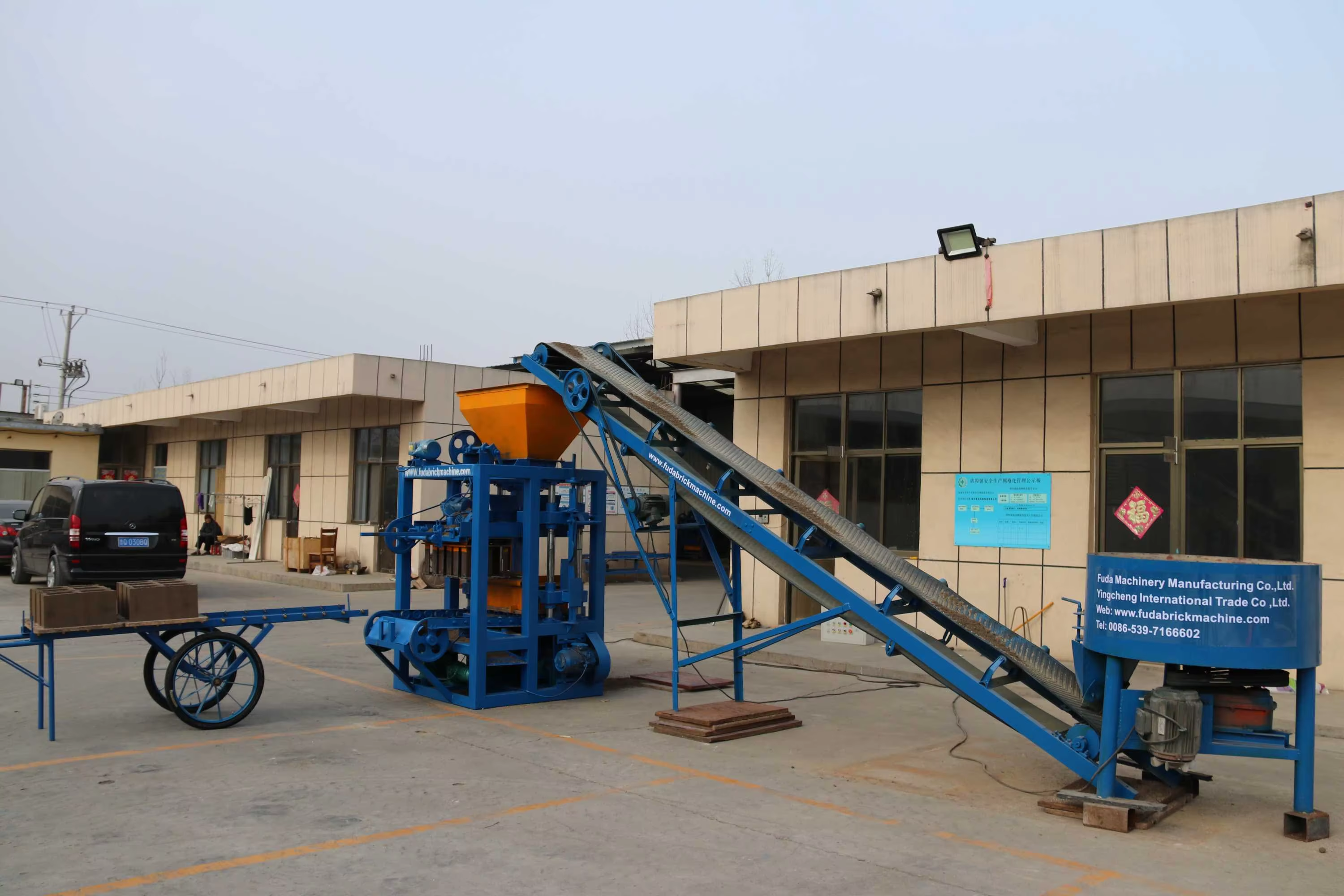
Core Operation: Manual Loading, Hydraulic Pressing, and Semi-Automated Curing Cycle
The concrete mix goes into the hopper by hand from operators who combine cement, sand, gravel, and water according to recipe specifications. Once loaded, hydraulic presses crank up to between 1500 and 3000 pounds per square inch, squeezing the mixture into molds that produce consistently sized blocks within about 15 to 25 seconds each time through. The curing process starts with a semi-automated system taking care of the early stages of hardening, though workers still need to physically remove finished blocks and stack them for transport. These machines rely on Programmable Logic Controllers or PLCs to adjust pressures and timing settings, which cuts down on wasted materials by around 18 percent when compared with older manual techniques. At output rates ranging from 300 to 600 blocks per hour, such equipment makes sense for facilities needing moderate production levels without breaking the bank on full scale automation investments.
Ideal Use Cases: Small-Scale Contractors, Rural Projects, and Budget-Conscious Startups
Semi automatic block making machines work best when there are limitations in infrastructure, money, or access to trained workers. For small contractors, these machines consume relatively little power usually around 15 kW or less and can be moved around easily, which means they can produce blocks right at construction sites for local homes or community developments. In many rural locations where people don't have much technical training, the machine's simple controls mean new operators can get going quickly without needing extensive instruction. New businesses see their return on investment come faster since the initial purchase price is roughly 40 to 60 percent cheaper compared to fully automated systems. These machines are particularly good for operations that only need to make about 50 thousand blocks per month or less, or for places where the electrical supply isn't reliable enough for bigger equipment. They deliver decent productivity while keeping resource demands manageable for most budgets.
Fully Automatic Block Making Machine: Capabilities, Output, and Infrastructure Needs
End-to-End Automation: From Raw Material Feeding to Stacking and Palletizing
Modern block making machines handle everything from start to finish without needing any human hands on deck. They take care of feeding materials, measuring ingredients precisely, then press them under intense pressure before curing and finally stacking them using robots. The whole process runs smoothly thanks to advanced PLC systems that coordinate robotic arms and conveyors so each block gets stacked just right, usually staying within about 1mm tolerance for size. These machines crank out over 20 thousand blocks per day, which is pretty impressive when compared to older semi-automatic versions. What's even better? The precise batching system cuts down on wasted materials by around 15%, saving both money and resources in the long run.
Minimum Requirements: Power Supply, Space, Skilled Operators, and Maintenance Support
Running a fully automatic system requires robust infrastructure:
- A stable 3-phase power supply (minimum 50 kVA capacity)
- Dedicated factory space of at least 1,000 sq ft—including room for the machine, curing zone, and material storage
- Technicians trained in PLC programming and electromechanical troubleshooting
- Preventive maintenance protocols supported by responsive service networks
Initial investment ranges from $60,000 to $500,000 depending on capacity, according to industry reports published in 2024. Operational success hinges on reliable access to raw materials and availability of qualified technical support within 48 hours. Energy use averages 25–40 kWh per 1,000 blocks produced.
Key Decision Factors: Matching Machine Type to Your Production Scale and Goals
Production Volume Thresholds: When Semi Automatic Becomes a Bottleneck
Semi-automatic machines typically reach practical limits at 5,000–7,000 blocks per 8-hour shift, primarily due to manual loading and semi-automated curing cycles. Beyond this range, labor fatigue and mechanical wear increase downtime and variability. Consider these comparative benchmarks:
Workshops producing under 5,000 blocks daily gain flexibility and cost control from semi-automatic systems. But when demand consistently exceeds 7,000 units/day, fully automated solutions become essential to sustain quality, output consistency, and workforce sustainability.
ROI Timeline Comparison: Upfront Cost vs. Long-Term Labour and Output Savings
Though semi-automatic machines require 60–70% less initial capital than fully automatic ones, their long-term economics depend heavily on scale. A representative ROI analysis shows:
For operations exceeding 7,000 blocks daily, fully automatic systems typically break even in 18–30 months, driven largely by labor reduction, higher throughput, and tighter waste control. Semi-automatic machines remain optimal for businesses targeting under 1.5 million blocks annually—where preserving working capital outweighs the need for maximum throughput.
Practical Recommendations for Selecting a Semi Automatic Block Making Machine
Start with what kind of daily output makes sense for your operation. Most small construction companies or regional precast suppliers usually handle around 12,000 blocks a day max, so a semi automatic machine tends to work best for them. It balances cost effectiveness with reliable performance and isn't too complicated to operate. Before buying anything though, check that the workshop space measures at least 10 meters by 5 meters and has access to three phase electricity. Finding a manufacturer with good local tech support matters a lot too. Nobody wants their equipment sitting idle while waiting for parts or repairs from overseas. When looking at specs, make sure the machine can vibrate at over 4,500 revolutions per minute and generate at least 16 mega pascals of hydraulic pressure. These numbers matter because they directly affect how well the blocks get compacted. Don't forget about training staff properly either. Even though semi automated systems reduce physical workload compared to hand made blocks, they still require consistent attention to timing during curing, controlling moisture levels, and applying mold release correctly. And think ahead about expansion possibilities. If there's a chance business will pick up enough to reach 15,000 units per day within five years, look for machines designed with modular components. Some models let businesses gradually add things like automatic feeding systems or specialized curing chambers as demand grows.
FAQ
What is the main difference between semi-automatic and fully automatic block making machines?
The main difference lies in automation. Semi-automatic machines require manual loading and some manual handling of blocks, while fully automatic machines handle the entire process, including feeding and stacking, without human intervention.
What are the ideal use cases for semi-automatic block making machines?
Semi-automatic machines are perfect for small-scale contractors, rural projects, and budget-conscious startups due to their lower cost, easy portability, and minimal power requirements.
How many blocks can a semi-automatic block making machine produce in a day?
A semi-automatic machine can typically produce between 3,000 to 7,000 blocks per 8-hour shift, depending on manual operations and curing times.
What infrastructure is needed for a fully automatic block making machine?
Fully automatic machines require a stable 3-phase power supply, at least 1,000 sq ft of dedicated factory space, and trained technicians for operation and maintenance.
When should businesses consider upgrading from semi-automatic to fully automatic machines?
Businesses should consider upgrading when their block production consistently exceeds 7,000 units per day to sustain quality, output consistency, and minimize labor costs.
Table of Contents
- How a Semi Automatic Block Making Machine Works and Where It Excels
- Fully Automatic Block Making Machine: Capabilities, Output, and Infrastructure Needs
- Key Decision Factors: Matching Machine Type to Your Production Scale and Goals
- Practical Recommendations for Selecting a Semi Automatic Block Making Machine
- FAQ