 EN
EN
Why Choose a Semi Automatic Block Making Machine for Medium-Scale Production?
Optimal Balance of Automation Precision and Human Oversight
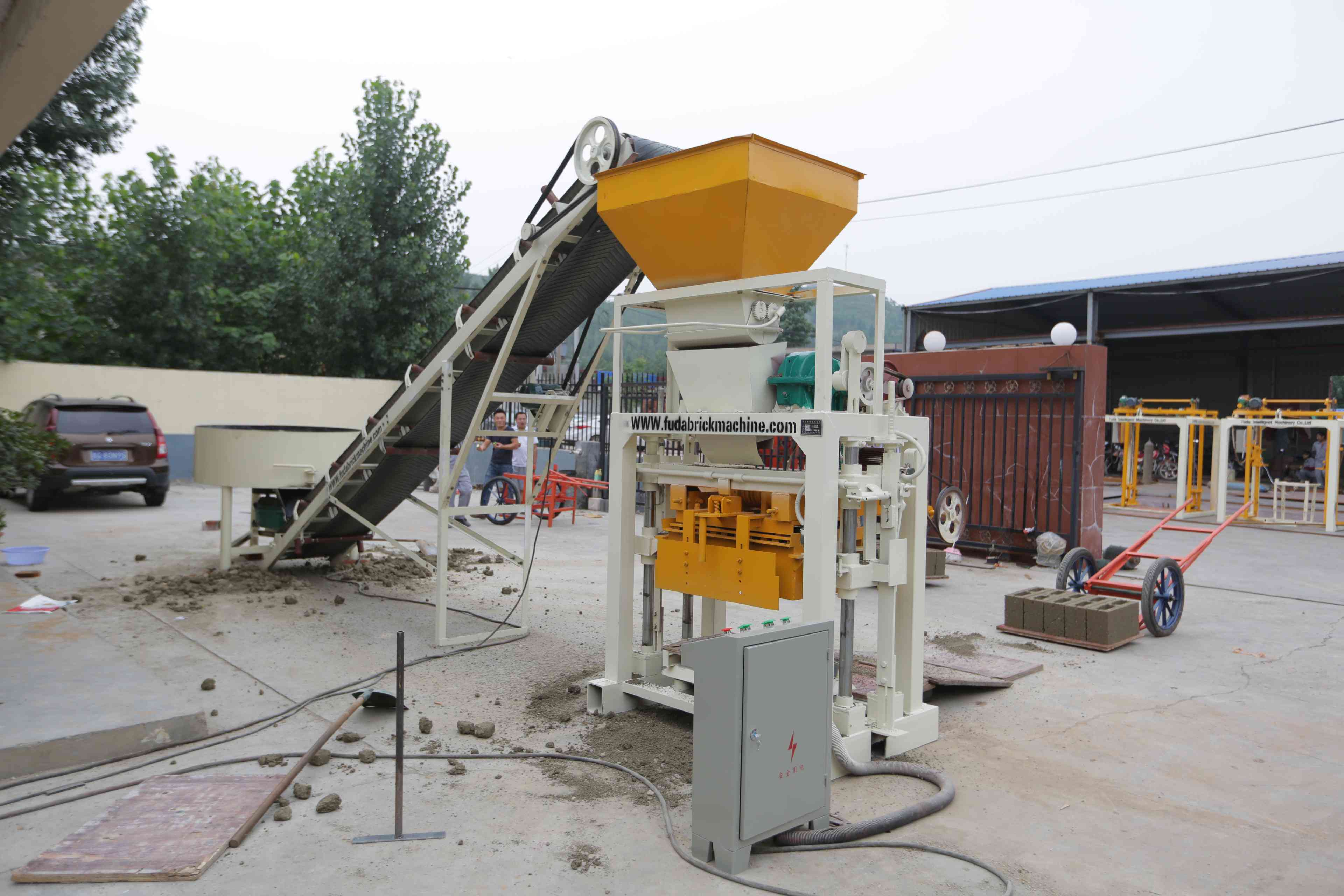
For medium scale operations, semi automatic block makers strike just the right balance between efficiency and control. These machines take care of those tricky parts where precision matters most like vibrating the mix, compacting it properly, and getting the material ratios right. The result? Blocks with consistent density and dimensions that stay within about 1.5mm tolerance range, which meets all the standard strength requirements without messing up the core quality factors that humans might get wrong. What makes them really valuable though is that loading and removing blocks still happens manually. This gives workers on site the ability to adjust quickly when they notice something off with the aggregate mix or changes in temperature conditions throughout the day. No need to stop everything for software updates or reprogramming either. Compared to fully automated systems, these hybrid models cut down training time for new staff by around 40%. And despite being less complex, they maintain roughly 98% quality consistency across production runs. Plus, the upfront investment costs are much lower than going all in on automation from day one.
Rising Adoption in Tier-2 Cities and Infrastructure Corridors
Construction companies of medium size in growing cities are jumping on board with semi automatic block machines lately, particularly noticeable near expanding highways and industrial zones. This has pushed growth rates in tier two cities to around 27% per year according to the latest Construction Equipment Report from 2024. Why are they catching on so fast? Well, there are several reasons actually. For starters, using local aggregates means saving money on transportation and reducing waste by about 18%. The output range of these machines between 800 and 1500 blocks daily matches what's needed for most infrastructure projects that happen in stages. Plus, they require significantly less energy than fully automated versions, needing somewhere between 15 to 25 kilowatt hours less. That matters a lot in regions where electricity isn't always reliable. City planners have started to favor these systems when building public housing units and schools too, since they need to keep costs down while still ensuring buildings stand up to scrutiny.
Economic Efficiency: ROI, Labor Savings, and Operational Cost Reduction
11–16-Month Average Payback Period (2023 Industry Data)
Looking at what's happening in the industry, we see that these machines typically pay for themselves within around 11 to maybe 16 months as of last year. The main reasons? Less wasted materials, cheaper energy bills, and fewer production stoppages. When it comes to mixing proportions, getting this right can actually cut down on raw material expenses by somewhere between 12 and 18 percent when compared to old fashioned manual approaches. And here's something important nobody talks about much these days – it doesn't cost nearly as much to get started with semi automatic equipment as going all in on fully automated systems would. For contractors who aren't huge operations yet but want to grow without breaking the bank, semi automatic solutions tend to offer the best bang for their buck when expanding their capabilities.
42% Fewer Operators vs. Manual Systems Without Compromising Output Quality
The machines cut down on labor needs by around 42 percent compared to old fashioned manual production methods while still hitting or beating quality standards. When we talk about automated vibration and compaction processes, what we get is consistent material density that hits over 1500 psi in compressive strength. This consistency means no more problems caused by worker fatigue, plus lower expenses related to wages, employee training, and fixing mistakes. As months turn into years, all these savings free up money that businesses can actually invest in expanding their operations rather than just keeping things running day to day.
Scalable Production Performance of the Semi Automatic Block Making Machine
Modular Upgrades: Expand Capacity from 800 to 2,200 Blocks/Day
The system was designed with scalability in mind. Output starts at around 800 blocks per day but can grow steadily up to 2,200 blocks as needed through simple modular additions like bigger mixers or automatic pallet movers, so there's no need to scrap everything and start over. This step-by-step approach cuts initial costs by about 30% when compared to going all-in on automation right away, which makes it much better suited for handling those sudden spikes in demand that often happen with local infrastructure work. Most setups typically churn out about 4,400 hollow blocks in an 8 hour workday. The machines keep things pretty consistent too, staying within plus or minus 1.5 mm on dimensions and hitting over 3.5 MPa for compressive strength. That means structures built this way will hold up just fine even after long production runs without quality issues popping up.
Consistent Block Quality and Structural Reliability
Semi-automatic block making machines deliver precision-engineered hollow blocks: uniform density (±2% variance), dimensional accuracy within 0.5 mm, and compressive strength exceeding 4.5 MPa. Controlled vibration eliminates air pockets; calibrated hydraulic pressure ensures homogeneous compaction. Unlike manual casting, this standardization prevents honeycombing and other load-bearing weaknesses–critical for medium-scale infrastructure.
Hollow Block Precision: Uniform Density, Dimensional Accuracy, and Compressive Strength
When using automated molding processes, we get consistent shapes throughout production runs because the machines adjust vibration settings based on what kind of materials are being used locally. According to industry reports, blocks made by machines typically reach around 98% uniform density while hand cast ones only hit about 82%. These differences matter for how well structures hold up over time. Blocks from automated systems can handle roughly 18% more weight along their length compared to traditional methods. Plus there's less need for mortar since these machine-made blocks fit together so much better. Contractors who have switched report saving money on materials and having fewer issues during construction projects.
Local Aggregate Integration Strategy Minimizes Downtime and Material Waste
Getting aggregates from within about 50 kilometers really helps cut down on those annoying supply chain delays by around 70 percent. Plus it allows for quick adjustments when there are changes in local sand or gravel availability. The equipment has this smart feature that keeps track of the right cement to aggregate ratio all on its own. No need for people to constantly tweak things manually which saves time and keeps the quality consistent throughout production runs. Some research done last year looked at 47 different mid sized construction sites and found that using this method actually reduced material waste compared to older fixed ratio approaches by roughly 35%. Makes sense when thinking about long term costs too.
FAQ
What are the key benefits of using a semi automatic block making machine?
Key benefits include a balance of automation and manual oversight, lower investment costs, rapid adoption in growing cities, improved ROI, labor savings, and consistent block quality.
How do semi automatic block making machines contribute to material waste reduction?
These machines reduce material waste by optimizing the cement-to-aggregate ratio, minimizing material overuse and rejected blocks while improving block quality consistency.
Why are semi automatic block making machines popular in tier-2 cities?
Their popularity in tier-2 cities stems from cost efficiencies, compatibility with local infrastructure requirements, and the ability to adapt to fluctuating electricity supply and aggregate availability.