 EN
EN
Fully Automatic Hydraulic Block Making Machine: Precision Hydraulic Pressure Control for Dimensional Accuracy and Strength Uniformity
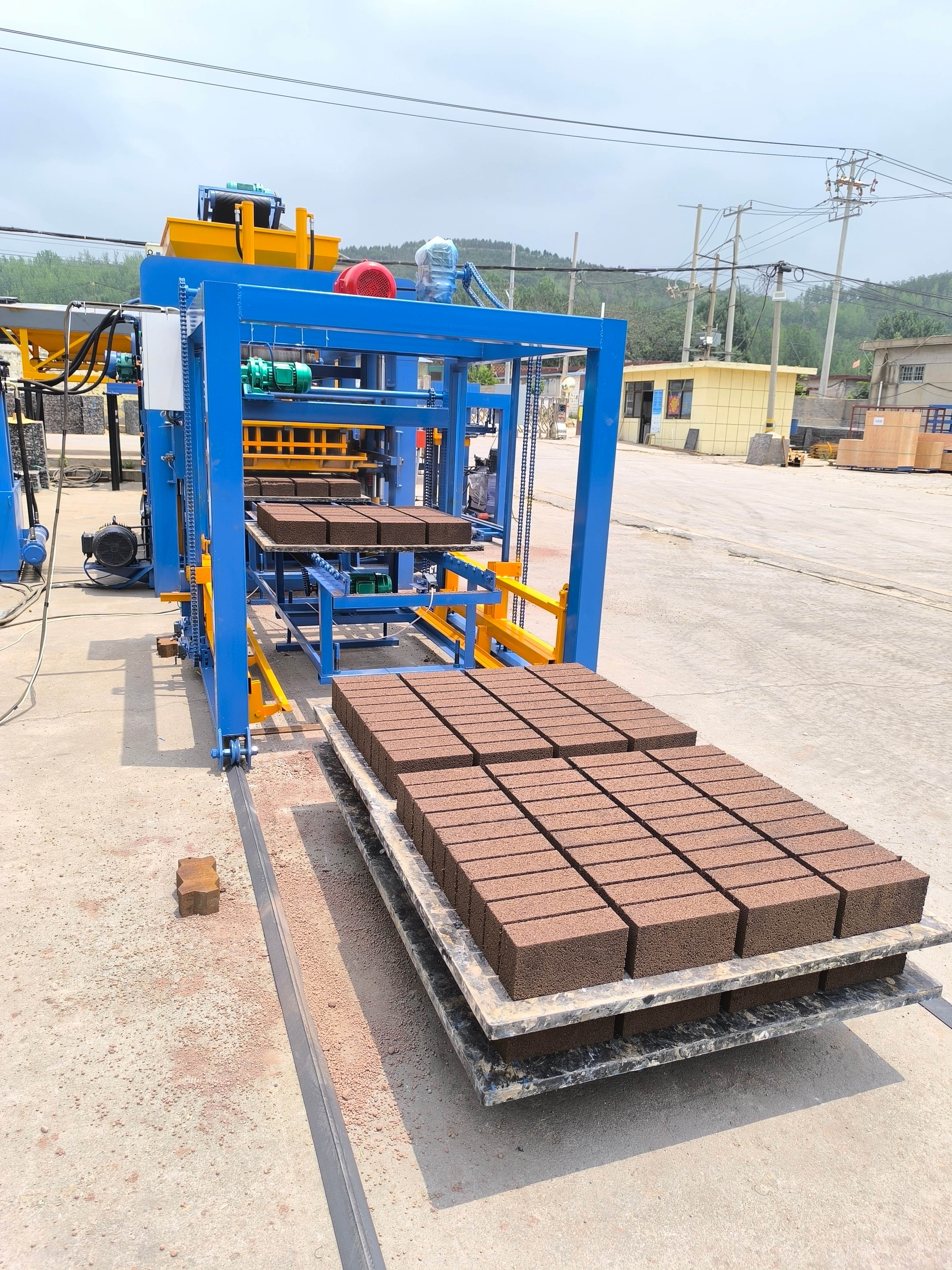
Calibrated force application and cycle repeatability: eliminating batch-to-batch variation
Automatic hydraulic fly ash brick makers really stand out when it comes to producing consistent results thanks to their servo controlled pressure systems. When these machines run, every time they compact the material, they apply almost exactly the same amount of force each time, within about half a percent variation. That eliminates all those little inconsistencies people introduce when operating semi automatic versions. The result? Bricks that have pretty much the same density throughout, which is super important if the structure needs to hold up properly. Some actual field testing has found that bricks made with hydraulic calibration maintain around 98.7% consistent compressive strength from one batch to another. Compare that to mechanical systems where this drops down to about 85%, and suddenly the benefits become pretty obvious for anyone concerned about quality control on construction sites.
Tight dimensional tolerance (±1.2 mm) vs. semi-automatic systems – impact on structural fit and mortar efficiency
Precision hydraulics achieve tolerances three times tighter than traditional methods (±1.2 mm vs. ±3.5 mm). This dimensional stability directly improves construction efficiency:
- Mortar savings: 18% reduction due to minimized gap filling
- Alignment speed: 30% faster wall assembly
- Structural load distribution: Eliminates stress concentrations caused by irregular block geometry
Optimal compaction window (12–16 MPa) for fly ash blocks: balancing density, strength, and energy efficiency
Hydraulic systems uniquely maintain the ideal 12–16 MPa pressure zone for fly ash mixtures–validated through industry testing. This precision delivers:
- Peak density: 2,050 kg/m³ without inducing over-compaction fractures
- Strength optimization: 14 MPa compressive strength at 15 MPa pressure
- Energy reduction: 22% lower consumption compared to constant high-pressure systems
The controlled pressure curve prevents micro-fractures common in impact-based compaction while ensuring complete void elimination–critical for frost resistance and long-term durability.
Real-Time Automated Quality Control: Sensors, Imaging, and AI-Driven Defect Detection
Ultrasonic density mapping during ejection: correlating acoustic velocity with compressive strength (ASTM C597)
The latest automatic hydraulic block makers now come equipped with ultrasonic sensors right when the mold gets ejected, allowing them to track how dense each block is as it forms. These sensors work by bouncing sound waves through the wet blocks and measuring how fast they travel. The faster the sound moves, the tighter packed the particles are inside, which gives a good idea of how strong the block will be once it's cured. This method meets ASTM C597 standards for testing strength without damaging anything. When operators see higher speeds on their displays, they know the mix is working well and can tweak things on the fly if needed to stay within specs all day long.
AI visual inspection for surface integrity – detecting micro-cracks, voids, and color drift with 99.3% reliability
After blocks come out of the mold, high res cameras snap pictures of their surfaces. These images get sent to AI systems that spot tiny problems like hairline cracks under half a millimeter, air pockets, and color variations across the surface area. The system catches these issues with pretty impressive accuracy around 99% give or take. What makes this approach better than what humans can do? For starters, it works much faster and doesn't rely on someone's personal judgment about what counts as defective. When something looks off, the system marks it right away so bad blocks never make it into actual building projects. Switching from old school manual checks cuts down on wasted material by roughly 15-20%, which adds up over time for manufacturers looking to tighten their bottom line while maintaining quality standards.
Controlled Forming Process: Enhanced Density, Durability, and Compressive Strength Consistency
22% lower water absorption vs. manual casting (per ASTM C140): direct result of uniform hydraulic compression
Automatic hydraulic block makers cut down on water absorption around 22 percent when compared to old school manual methods according to ASTM C140 standards. What makes this happen? Well, these machines apply pressure evenly throughout the forming process, so there are fewer tiny air pockets left behind and materials get distributed better overall. When blocks are compacted consistently between 12 to 16 MPa, they form tighter structures that keep moisture out. This matters because blocks last longer through those winter freezes and thaws plus stand up better against chemicals eating away at them. Production runs show compressive strength stays pretty much the same, varying only about ±1.5 MPa from batch to batch. Plus, there's less chance of salt buildup on surfaces and better bonding with mortar, which means buildings stay intact longer and require less fixing over time.
Integrated Vibration Mixing and Material Homogenization: Foundation for Batch-to-Batch Uniformity
Synchronized 50 Hz vibration + hydraulic dwell time: optimizing particle packing and air void elimination
When we match 50 Hz vibrations with the right hydraulic dwell time, it really helps create more uniform materials by getting those particles packed properly. The high frequency shaking actually breaks apart clumps of cement and fly ash that tend to stick together, which makes everything pack tighter and pushes out any trapped air bubbles. At the same time, keeping steady hydraulic pressure during this waiting period means the material stays compacted instead of settling unevenly. Tests show this method can cut down on empty spaces inside the mix by around 22% compared to what happens when people do it manually. What this all adds up to is a much more consistent product where every part cures at about the same rate and has similar strength throughout. Getting rid of those pesky air pockets and weak spots not only makes bricks last longer but also saves money because there's less waste. That's why many manufacturers see value in investing in automatic hydraulic systems for their fly ash brick production lines despite the upfront costs, since they end up with better yields and fewer rejected products overall.
FAQ
- What are the advantages of using automatic hydraulic systems for brickmaking?Automatic hydraulic systems provide consistent pressure control, resulting in tight dimensional tolerance, reduced water absorption, and optimized strength and density, which enhance durability and efficiency in construction projects.
- How do ultrasonic sensors contribute to quality control in brickmaking?Ultrasonic sensors measure the density of blocks in real-time through acoustic velocity, ensuring strength consistency without damage, meeting ASTM C597 standards.
- Can AI visual inspection improve defect detection?Yes, AI visual inspection effectively detects micro-cracks, voids, and color drift with impressive accuracy, reducing waste and ensuring high-quality bricks are used in construction.
- Does vibration mixing impact brick quality?Vibration mixing with synchronized hydraulic pressure enhances material uniformity and eliminates air voids, leading to consistent strength and reduction in waste production.
Table of Contents
-
Fully Automatic Hydraulic Block Making Machine: Precision Hydraulic Pressure Control for Dimensional Accuracy and Strength Uniformity
- Calibrated force application and cycle repeatability: eliminating batch-to-batch variation
- Tight dimensional tolerance (±1.2 mm) vs. semi-automatic systems – impact on structural fit and mortar efficiency
- Optimal compaction window (12–16 MPa) for fly ash blocks: balancing density, strength, and energy efficiency
- Real-Time Automated Quality Control: Sensors, Imaging, and AI-Driven Defect Detection
- Controlled Forming Process: Enhanced Density, Durability, and Compressive Strength Consistency
- Integrated Vibration Mixing and Material Homogenization: Foundation for Batch-to-Batch Uniformity