 EN
EN
Core Hydraulic System of Concrete Block Brick Making Machine: Principles and Key Components
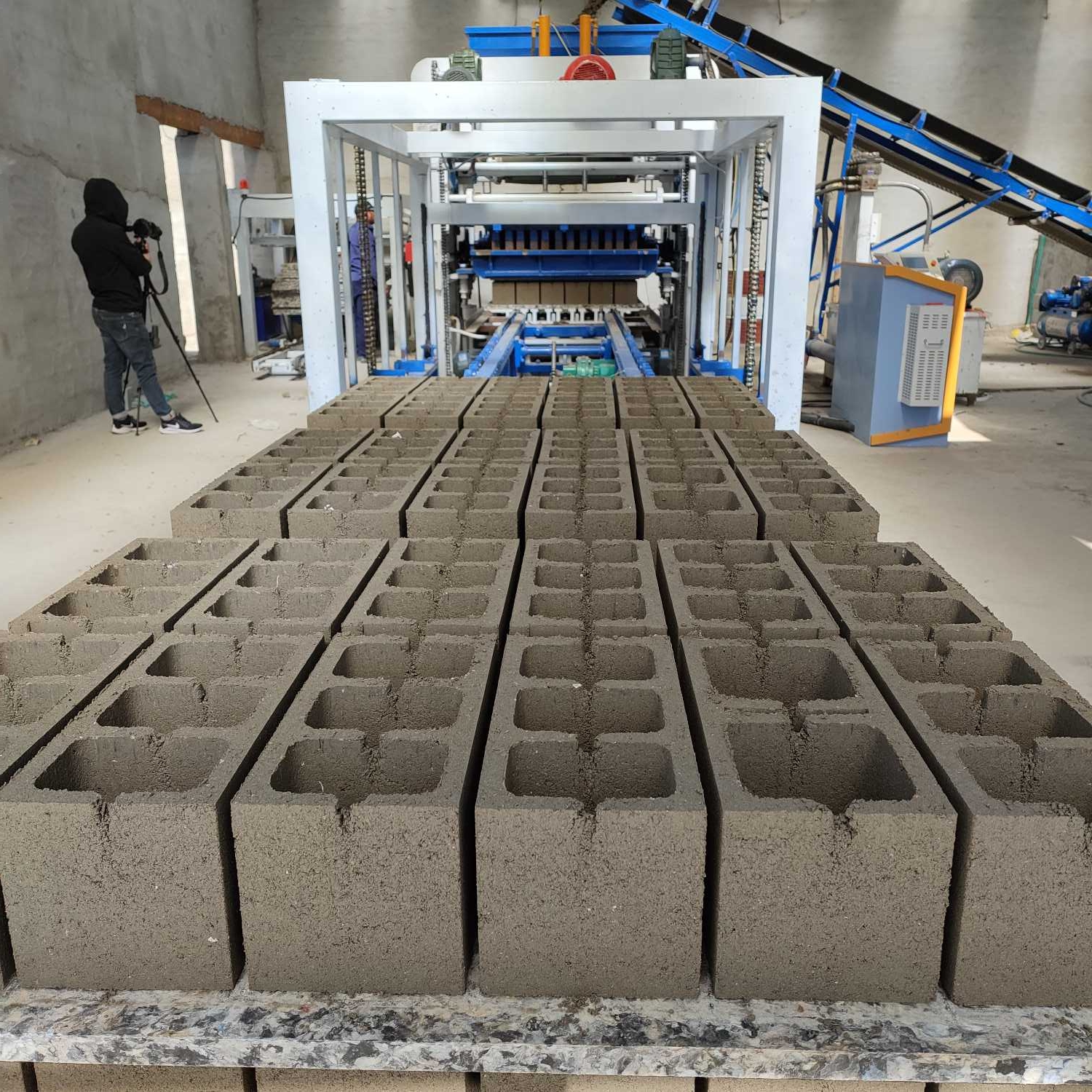
Pascal’s Principle and Force Multiplication for High-Pressure Compaction
Hydraulic fly ash brick machines work because of something called Pascal's Principle, which is basically the main rule about how fluids behave under pressure and lets these machines create compaction forces over 15 MPa. The principle says that if you apply pressure to a fluid that can't be compressed inside a closed system, that pressure spreads out evenly everywhere. So here's what happens: when someone applies even a tiny force to a small piston, the pressure gets spread throughout the whole hydraulic system. And when that same pressure reaches a bigger piston, boom! We get way more force coming out than went in. Let's put numbers to it. If someone pushes with 100 kg on a piston area of just 10 square centimeters, they're creating 10 MPa of pressure. That translates to pushing power equivalent to 10,000 kg on a piston that's 100 square centimeters big. This neat trick means we can use smaller electric motors to achieve those heavy duty pressures without all the wear and tear that comes with older methods like eccentric cams or vibrating mechanisms.
Essential Hydraulic Elements: Variable-Displacement Pump, Proportional Valves, Locking Cylinders, and Mold Actuators
Four precision components orchestrate the hydraulic sequence:
- Variable-displacement pumps dynamically adjust oil flow (0–100 L/min) via swashplate control, matching energy delivery to real-time compaction demands—reducing power consumption by 30% versus fixed-displacement units
- Proportional valves deliver ±0.2 MPa pressure regulation through solenoid-driven spools, precisely governing flow direction during mold filling, pre-compression, main compaction, and ejection
- Locking cylinders sustain >18 MPa clamping force throughout compression, preventing mold flexure that could compromise dimensional accuracy beyond ±0.5 mm
- Dual-action mold actuators synchronize upper and lower punch movement using telescopic rod designs, ensuring uniform density distribution across the brick cross-section
This integrated circuit eliminates mechanical linkages and enables programmable pressure profiles—critical for optimizing fly ash-to-cement ratios without iterative trial runs. To withstand abrasive fly ash particulates, manufacturers specify hardened chrome-plated rods and triple-lip seals—directly extending service life and reducing long-term maintenance costs.
Hydraulic Compression Process: Achieving Density, Strength, and Dimensional Accuracy
Generating 12–18 MPa Pressure to Attain >15 MPa Compressive Strength in Fly Ash Bricks
Hydraulic compression works by applying around 12 to 18 MPa of pressure to fly ash mixtures. This pressure helps get rid of air pockets and makes the particles shift positions. When we look at what happens during this process, we see better bonding between particles and a more uniform structure forming. As a result, the compressive strength regularly goes above 15 MPa. That meets the structural needs for load bearing masonry according to ASTM standards where they require at least 15 MPa for most industrial uses. What makes hydraulic compaction stand out compared to vibration techniques is that it reaches these strength levels without needing extra water or cement. This approach actually improves sustainability because it uses more fly ash. By doing so, it keeps coal combustion waste out of landfills and creates building materials that comply with all necessary codes and regulations.
Maintaining ±0.5 mm Tolerance via Synchronized Mold Clamping and Controlled Ejection
Getting accurate dimensions depends on two main steps working together: multi point mold clamping and the servo regulated ejection system. When compacting materials, proportional valves kick in to activate the locking cylinders. These apply even pressure all over the mold frame which helps fight off any sideways expansion forces. The result? Tolerances stay within about half a millimeter. Once compression is done, the ejection happens smoothly with minimal friction. Servo valves control how fast the rods extend, making sure everything moves gradually and straight. This careful approach cuts down on shear stress for the green brick itself, so we see fewer issues with edges chipping or corners warping. The benefits are pretty significant too. Better dimensional control means less work needed later on for finishing touches. Masonry projects actually align better when built with these tighter tolerances. Contractors have reported assemblies going together about 15 percent faster when working with bricks that maintain ±0.5 mm specs compared to ones at ±1 mm.
Automated Operational Cycle: From Material Filling to Finished Block Ejection
Four-Stage Sequence: Filling – Pre-Compression – Main Hydraulic Compaction – Precision Ejection
The automatic hydraulic fly ash brick making machine executes a repeatable four-stage PLC-controlled cycle:
- Filling: Volumetric feeders deposit a precise quantity of dry-mixed fly ash, cement, and additives into the mold cavity, ensuring consistent fill density
- Pre-Compression: Low-force (~2–4 MPa) initial compaction removes entrapped air and initiates particle interlocking
- Main Hydraulic Compaction: Locking cylinders engage while main rams apply 12–18 MPa pressure over a calibrated dwell time, achieving target density and >15 MPa compressive strength
- Precision Ejection: Dual-acting actuators retract punches in synchronized motion, releasing the formed brick with ±0.5 mm dimensional fidelity
Each full cycle completes in under 30 seconds, supporting continuous high-volume production without sacrificing quality. The absence of manual intervention enhances repeatability and reduces operator-dependent variability.
Why Hydraulic Systems Deliver Superior Precision, Consistency, and Value in Modern Brick Production
Real-Time Pressure Feedback Ensures Batch Uniformity (CV < 3%) and Reduces Waste
When using closed loop pressure monitoring systems that sample at over 20 Hz, operators can adjust valve positions in just about 50 milliseconds. This keeps the compaction force stable within plus or minus 1.5% throughout each production cycle. The level of control achieved results in very consistent product density from batch to batch. Testing shows the coefficient of variation stays under 3%, which beats traditional mechanical systems hands down. According to tests done by NABL accredited labs last year, this kind of precision actually saves materials by cutting waste by more than 18%. Brick rejection rates drop below 0.8% too, meaning fewer weak spots in the final products and naturally lower costs for raw materials over time.
Impact on Automatic Hydraulic Fly Ash Brick Making Machine Price: Efficiency Gains vs. Long-Term ROI
Although advanced hydraulic controls raise the initial investment by 15–20%, their operational advantages yield strong financial returns:
- Energy savings: 40% lower consumption than vibration-based machines
- Labor efficiency: Three operators can manage output equivalent to eight manual laborers
- Material optimization: Annual savings of $12,000 per 10,000-brick/day capacity
Over a 7-year service life, these gains offset more than 90% of the premium cost, delivering 22% higher ROI than semi-automatic alternatives (Construction Tech Review, 2024). Integrated self-diagnostic capabilities further reduce annual maintenance costs by $740 and extend service intervals by 300%.
FAQs
What is the main principle behind hydraulic fly ash brick machines?
Hydraulic fly ash brick machines work on Pascal's Principle, which states that when pressure is applied to a confined fluid, it is transmitted equally in all directions within the system.
How do variable-displacement pumps contribute to the efficiency of hydraulic systems?
Variable-displacement pumps adjust the oil flow dynamically, matching energy delivery to real-time compaction demands, which reduces power consumption significantly.
Why is hydraulic compression more sustainable compared to vibration techniques?
Hydraulic compression does not require extra water or cement and utilizes more fly ash, thereby reducing coal combustion waste and making use of resources more sustainably.
What are the financial benefits of advanced hydraulic controls?
Despite a higher initial investment, advanced hydraulic controls lead to energy savings, increased labor efficiency, and material optimization, resulting in strong financial returns over time.
Table of Contents
- Core Hydraulic System of Concrete Block Brick Making Machine: Principles and Key Components
- Hydraulic Compression Process: Achieving Density, Strength, and Dimensional Accuracy
- Automated Operational Cycle: From Material Filling to Finished Block Ejection
- Why Hydraulic Systems Deliver Superior Precision, Consistency, and Value in Modern Brick Production
- FAQs