 EN
EN
Labor Cost Reduction: How Fully Automatic Hydraulic Machines Cut Personnel Needs by Up to 70%
Operational efficiency gains: From 6–8 manual laborers to 1–2 operators per shift
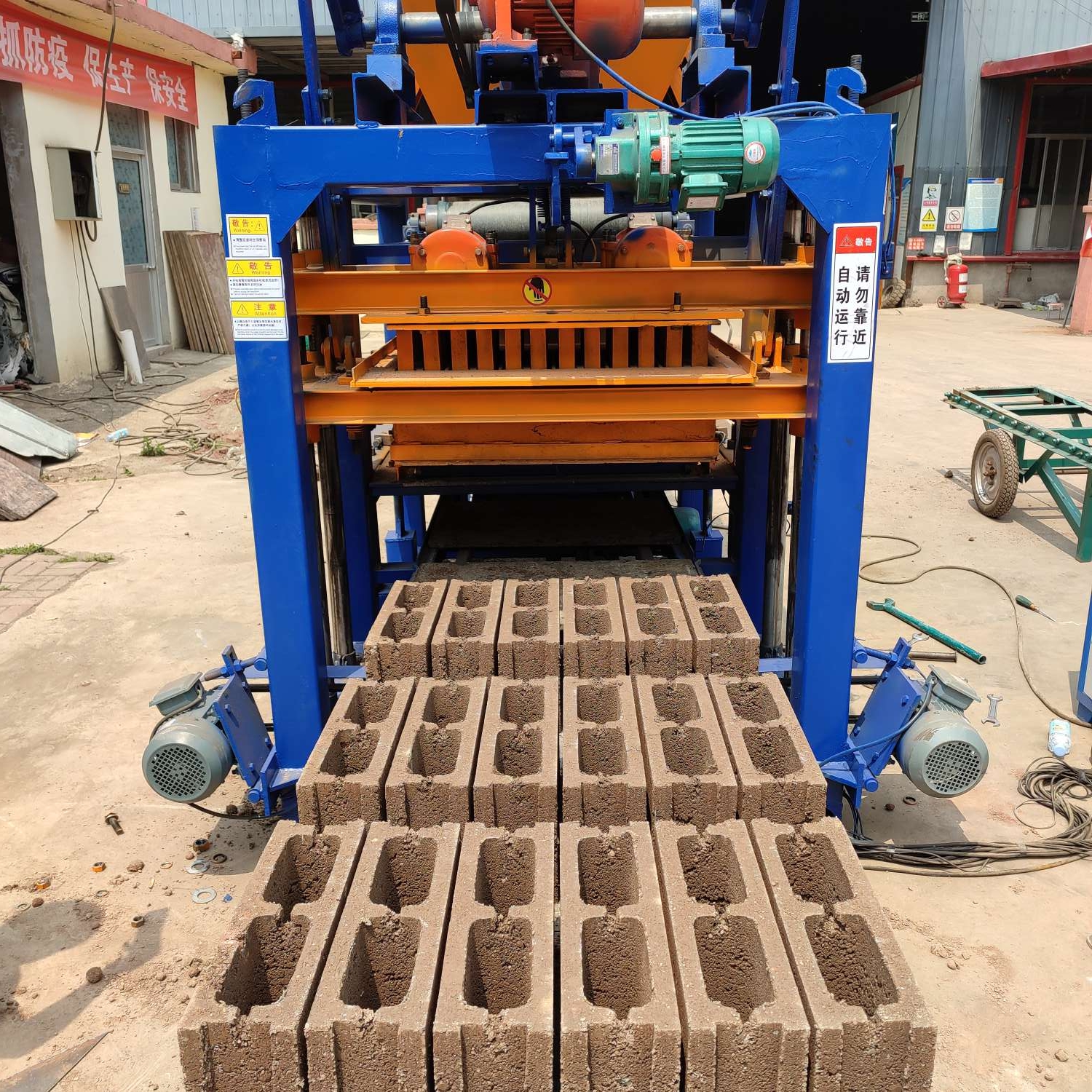
Fully automatic hydraulic block making machines replace fragmented manual tasks with PLC-guided automation—eliminating the need for separate workers handling material feeding, mold filling, compaction timing, and visual quality checks. Where traditional setups require 6–8 laborers per shift, modern systems operate reliably with just 1–2 trained technicians monitoring cycle integrity and system diagnostics. This 65–70% reduction in personnel stems from integrated servo-hydraulics that self-regulate compression pressure and synchronized conveyor systems that automate material transfer end-to-end. As confirmed by the Production Efficiency Journal (2023), such plants achieve 22% higher daily output without compromising dimensional consistency—directly lowering per-unit labor cost while improving throughput predictability.
ROI comparison: Fully automatic vs. semi-automatic systems — payback period under 14 months
Labor savings alone drive rapid ROI when comparing fully automatic hydraulic fly ash brick making machines against semi-automatic alternatives. Semi-automatic systems retain manual curing, stacking, and periodic pressure adjustments—requiring 4–5 operators per shift versus just 1–2 for fully automated lines. In typical Indian precast units, this differential delivers ₹1.8–₹2.4 lakh in monthly labor savings. Combined with a 30% reduction in rejection rates—and factoring in lower training overhead, eliminated overtime, and reduced supervision burden—the initial investment recoups within 10–14 months. Over three years, mid-scale operations report cumulative operational savings exceeding ₹65 lakh, reinforcing automation as a capital-efficient growth lever—not just a cost-cutting measure.
Eliminating Human Error: Achieving <0.4% Defect Rates Through PLC-Guided Hydraulic Precision
How real-time PLC feedback loops standardize compression cycles and eliminate operator-dependent variability
Real-time PLC feedback loops continuously monitor hydraulic pressure, vibration amplitude, dwell time, and mold alignment during every compression cycle—adjusting actuation parameters within milliseconds. Unlike manual operation—where fatigue, inconsistent timing, or subjective judgment introduce variation—PLCs enforce repeatable profiles across thousands of cycles. For instance, if pressure deviates beyond ±0.2 MPa from the target, the system automatically recalibrates servo valves without operator input. This precision maintains dimensional tolerances within ±0.5mm and ensures uniform density distribution—key determinants of compressive strength and durability. Global production data shows such closed-loop control reduces rejection due to dimensional inconsistency and under-compaction by 57%, establishing a new benchmark for process reliability.
Case evidence: Gujarat precast unit’s defect rate drop from 8.2% to 0.37% post-automation (ASTM C1319 verified)
A Gujarat-based precast facility upgraded from semi-automatic to a PLC-controlled hydraulic block maker and achieved ASTM C1319-verified defect rates falling from 8.2% to 0.37% within six months. Hydraulic pressure consistency rose to 99.4%, energy consumption dropped by 18%, and daily output stabilized at 27,000 fly ash bricks—with near-zero rework required. The plant attributes this transformation not only to tighter controls but also to reduced dependency on operator vigilance and skill retention. These outcomes validate why leading infrastructure developers now treat PLC-guided hydraulic precision as non-negotiable in high-volume, specification-sensitive applications.
Automatic Hydraulic Fly Ash Brick Making Machine Price Considerations and Value Drivers
Breaking down the price range: ₹28–₹45 lakh for industrial-grade fully automatic hydraulic systems
Industrial-grade fully automatic hydraulic block making machines fall within a ₹28–₹45 lakh price band—reflecting capacity (8,000–15,000 bricks/day), technical integration, and long-term reliability engineering. Systems exceeding 12,000 units/day typically occupy the upper end of this range, incorporating advanced feeding, palletizing, and curing chamber interfaces. Entry-tier models retain core hydraulic functionality but lack seamless material-handling automation. The 35% pricing variance largely reflects optional integrations like robotic stackers or IoT-enabled remote diagnostics—not incremental performance compromises. According to 2024 construction equipment ROI studies, these systems deliver 42% lower lifetime operating costs than semi-automatic counterparts, driven primarily by 60% fewer hydraulic maintenance interventions and extended component service life.
What justifies premium pricing? Integrated PLC, servo-hydraulics, mold auto-cleaning, and fly ash compatibility
Four interdependent technologies justify the investment: (1) Programmable Logic Controllers enable granular, repeatable pressure profiling—replacing manual calibration with millisecond-level response; (2) Servo-hydraulic systems cut energy use by 55% through demand-responsive fluid delivery, reducing thermal stress and wear; (3) Mold auto-cleaning mechanisms remove fly ash residue every 8–10 cycles, preserving dimensional accuracy within ±0.8mm and eliminating manual downtime; and (4) Engineered fly ash compatibility allows up to 90% waste utilization without sacrificing strength—cutting raw material costs by 30–40% versus clay-based production. Together, these features sustain <0.5% defect rates, enable 1–2 technician operation, and deliver verified 18-month payback in high-volume precast settings.
FAQs
How do fully automatic hydraulic machines reduce labor costs?
Fully automatic hydraulic machines use PLC-guided automation to streamline manual tasks like material feeding and mold filling, reducing the need for manual labor from 6–8 workers per shift to just 1–2 operators.
What is the payback period for fully automatic hydraulic systems compared to semi-automatic systems?
The payback period for fully automatic hydraulic block-making systems is typically under 14 months due to significant labor savings and efficiency improvements over semi-automatic systems.
How do PLC feedback loops improve production quality?
PLC feedback loops standardize compression cycles by adjusting actuation parameters in real-time, reducing dimensional inconsistencies and defect rates dramatically.
What price range should I expect for industrial-grade fully automatic hydraulic machines?
The price range for industrial-grade fully automatic hydraulic machines is typically between ₹28–₹45 lakh, depending on the system's capacity and technical features.
What technologies justify the premium price of fully automatic hydraulic machines?
The premium price is justified by integrated technologies like PLC for precise pressure control, servo-hydraulics for energy efficiency, mold auto-cleaning mechanisms, and engineered fly ash compatibility.
Table of Contents
- Labor Cost Reduction: How Fully Automatic Hydraulic Machines Cut Personnel Needs by Up to 70%
- Eliminating Human Error: Achieving <0.4% Defect Rates Through PLC-Guided Hydraulic Precision
- Automatic Hydraulic Fly Ash Brick Making Machine Price Considerations and Value Drivers
-
FAQs
- How do fully automatic hydraulic machines reduce labor costs?
- What is the payback period for fully automatic hydraulic systems compared to semi-automatic systems?
- How do PLC feedback loops improve production quality?
- What price range should I expect for industrial-grade fully automatic hydraulic machines?
- What technologies justify the premium price of fully automatic hydraulic machines?