 EN
EN
Cost Efficiency: Automation, Energy Savings, and ROI
Labor and raw material savings from fully automatic operation
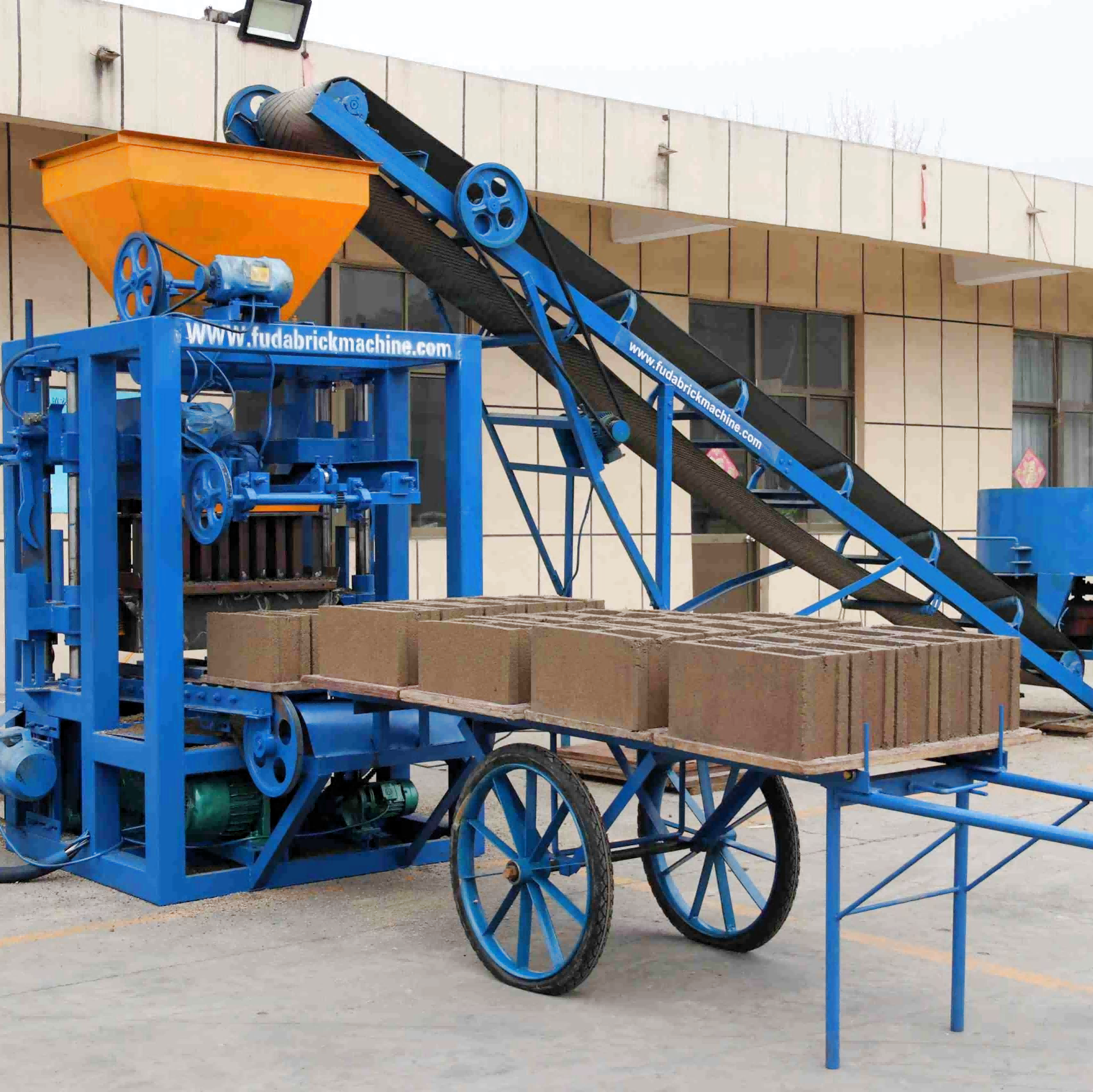
Fully automated hydraulic brick production lines eliminate manual material handling, reducing labor costs by up to 60% compared to semi-automatic systems. Precise dosing mechanisms cut raw material waste by 15–25%—primarily through optimized cement and fly ash consumption—while ensuring consistent brick density and eliminating human error in mixing ratios. These gains directly strengthen production economics without compromising output quality.
Energy-efficient hydraulic compression reducing operational expenditure
Modern hydraulic systems consume 30% less power than mechanical alternatives, thanks to variable-speed drives and intelligently optimized pressure curves. Smart energy recovery modules capture and reuse up to 20% of compression energy during ram retraction. Collectively, these features reduce electricity costs by $0.003–$0.007 per brick—a meaningful impact at scale.
ROI analysis: balancing automatic hydraulic fly ash brick making machine price with long-term savings
Although the initial investment in an automatic hydraulic fly ash brick making machine is substantial, operational savings typically deliver ROI within 18–30 months. The table below illustrates key cost differentials per 10,000 bricks:
| Cost Factor | Traditional System | Automated Hydraulic Line |
|---|---|---|
| Labor | $28–$35 | $8–$12 |
| Energy | $15–$22 | $9–$14 |
| Material waste rate | 8–12% | 3–5% |
When combined with 40–60% higher output rates, lower maintenance demands, and a 90% reduction in brick rejection rates, plants realize net savings of approximately $740,000 over five years [Ponemon Institute, 2023]. This compounding effect reinforces the value proposition—not just as equipment procurement, but as a strategic upgrade in manufacturing capability.
Structural Performance: Interlocking Geometry and Hydraulic Precision
Faster construction and load distribution advantages of interlocking brick design
Interlocking cement bricks feature tongue-and-groove geometry that eliminates mortar requirements during assembly—accelerating construction speeds by 40–50% versus conventional bricklaying. The mechanical interlock creates continuous load pathways across walls, distributing weight evenly and preventing stress concentration. Field testing confirms interlocking walls withstand 25% higher seismic loads than traditional masonry, while their self-aligning profile reduces dependency on highly skilled labor during installation.
Consistent compressive strength and quality control via calibrated hydraulic pressure systems
Closed-loop hydraulic pressure monitoring ensures exact, repeatable compression forces during brick forming—delivering uniform density and consistent compressive strength (7–15 MPa) across every unit. Automated systems maintain pressure within ±2% tolerance, removing variability inherent in manual or semi-automated processes. This precision translates directly into structural reliability: buildings constructed with hydraulic-pressed bricks exhibit 30% fewer cracks in load-bearing walls over five-year performance evaluations.
Sustainability: Low-Carbon Production and Resource Optimization
Reduced energy consumption and emissions in interlocking brick manufacturing
Hydraulic interlocking brick production bypasses energy-intensive kiln firing entirely, curing bricks at ambient temperatures instead—cutting total energy use by up to 40% versus fired-clay methods. Precision hydraulic compression, minimized idle time, and integrated heat recovery systems further shrink the carbon footprint, yielding ~0.8 tons of CO₂ avoided per 10,000 bricks produced [Construction Materials Lifecycle Analysis, 2023]. The result is a closed-loop, low-carbon process that meets rigorous environmental standards without sacrificing throughput or durability.
Cement reduction, mortar-free laying, and responsible fly ash utilization
Mortar-free interlocking construction reduces on-site cement usage by 15–20% per project while preserving structural integrity through mechanical interlock. Meanwhile, the production process incorporates up to 70% fly ash—a non-hazardous byproduct of thermal power generation—diverting waste from landfills and decreasing reliance on virgin materials. When paired with water recycling and zero-waste molding practices, manufacturers achieve near-total input utilization—turning sustainability into both an environmental and economic advantage.
FAQ
What are the cost savings of using fully automated hydraulic brick production lines?
Fully automated hydraulic brick production lines can reduce labor costs by up to 60% and raw material waste by 15–25%, resulting in significant cost savings.
How do modern hydraulic systems impact energy costs?
Modern hydraulic systems consume 30% less power and can reduce electricity costs by $0.003–$0.007 per brick due to energy-efficient features.
What is the ROI timeline for investing in an automatic hydraulic fly ash brick making machine?
The ROI for investing in an automatic hydraulic fly ash brick making machine is typically within 18–30 months due to operational savings.
What are the structural benefits of interlocking brick design?
Interlocking bricks allow for faster construction speeds and even weight distribution, withstanding up to 25% higher seismic loads compared to traditional masonry.
How does hydraulic interlocking brick production contribute to sustainability?
Hydraulic interlocking brick production reduces energy consumption and emissions, avoids kiln firing, and utilizes up to 70% fly ash, promoting environmental sustainability.
Table of Contents
- Cost Efficiency: Automation, Energy Savings, and ROI
- Structural Performance: Interlocking Geometry and Hydraulic Precision
- Sustainability: Low-Carbon Production and Resource Optimization
-
FAQ
- What are the cost savings of using fully automated hydraulic brick production lines?
- How do modern hydraulic systems impact energy costs?
- What is the ROI timeline for investing in an automatic hydraulic fly ash brick making machine?
- What are the structural benefits of interlocking brick design?
- How does hydraulic interlocking brick production contribute to sustainability?