 EN
EN

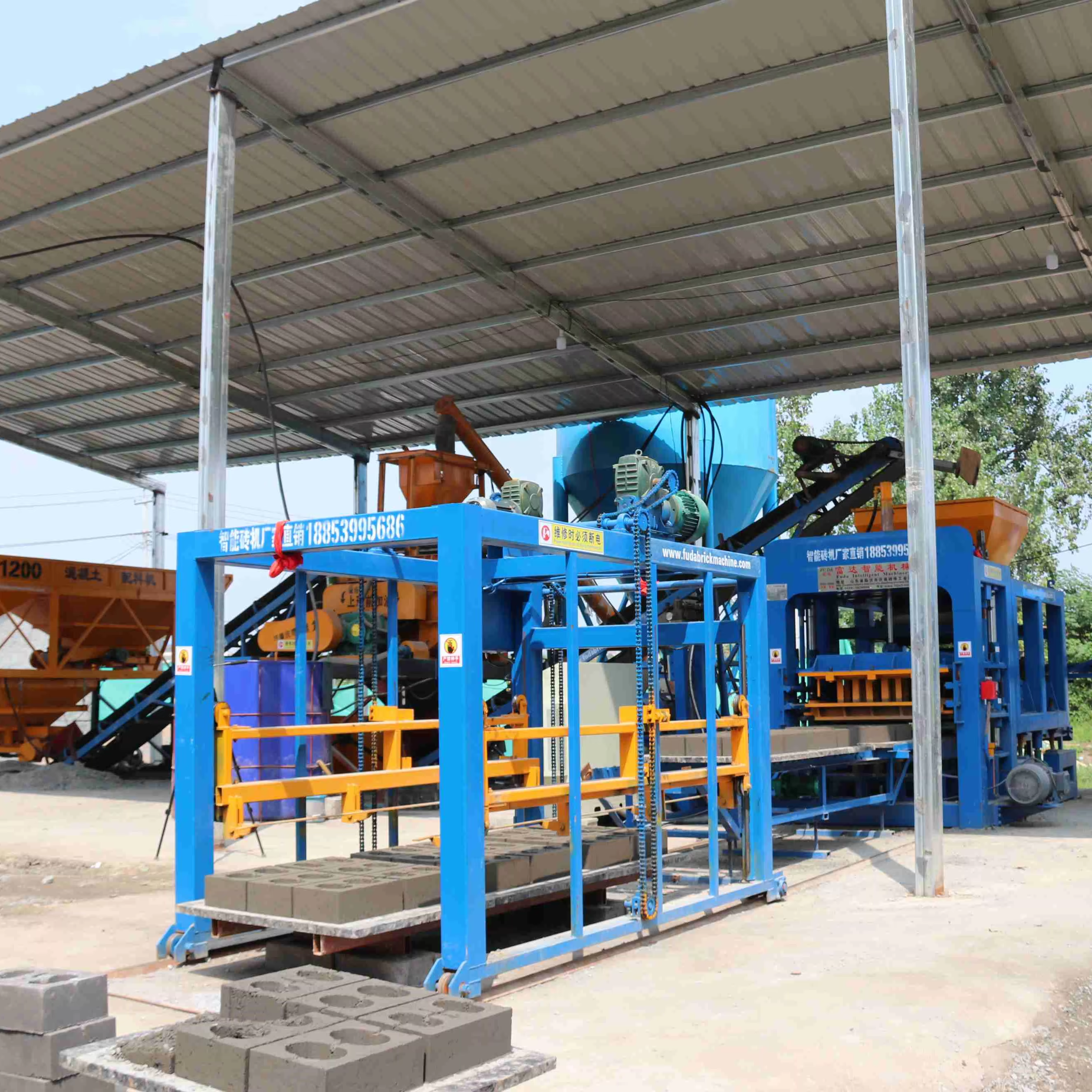
Core Features of a Mobile Block Making Machine for Maximum Productivity
Automatic vs. manual operation: Impact on efficiency and labor needs
Today's mobile block machines rely heavily on automated systems to cut down on the need for workers. The whole operation handles everything from mixing materials to forming and stacking blocks with very little hands-on work required. Most units can churn out between 1,200 to 2,000 blocks each day with only one or two people needed to monitor things. That represents a massive reduction in staffing requirements compared to older manual methods, sometimes cutting labor needs by as much as 70%. From a cost perspective, businesses save anywhere from $18 to $24 per hour on wages alone. Plus, the end products tend to be far more uniform in quality since machines don't make the same kinds of errors humans might when tired or rushed.
Machine mobility and pallet-free design as key competitive advantages
Pallet-free technology eliminates the need for wooden bases, lowering material costs by $0.12-$0.18 per block. Compact units equipped with integrated wheels can be relocated in under 30 minutes, allowing contractors to serve multiple job sites efficiently. This mobility cuts transportation delays by 65% compared to fixed production plants.
User-friendly controls and adaptability across diverse job sites
Touchscreen interfaces with multilingual support enable operators to become proficient in less than two hours. Modular mold systems allow quick transitions between more than 12 block types-from standard hollow blocks (200x200x400 mm) to specialized paving stones-without mechanical reconfiguration.
Energy-efficient performance in modern mobile concrete block machines
Advanced hydraulic systems use 18-25% less power than traditional models, reducing energy expenses to $0.08-$0.12 per m³ of finished blocks. Solar-compatible variants now represent 40% of available models, offering hybrid power options that decrease reliance on grid electricity.
Durability and low maintenance requirements for continuous operation
High-chrome steel molds endure over 50,000 cycles before requiring refurbishment. Vibration-dampening frames extend bearing life threefold beyond industry averages, and self-lubricating components reduce service intervals to every 400 operating hours, significantly minimizing downtime.
Mobile Block Making Machine Price: Understanding Cost vs. Value
When evaluating mobile block making machine prices, contractors must balance initial investment against long-term operational gains. Units range from $45,000 for basic semi-automatic models to over $200,000 for fully automated systems, with cost closely tied to output capacity-ranging from 800 to 4,000 blocks per day.
Price Range by Automation Level and Production Capacity
Entry-level manual machines cost 60% less than automated versions but require triple the labor per project. Mid-range semi-automatic models ($75,000-$120,000) deliver optimal value for contractors needing 1,500-2,500 blocks daily without full-time operator teams.
Affordability for Small to Mid-Sized Contractors
Mobile units can reduce operational expenses by 20-30% compared to stationary plants, primarily through fuel savings and eliminated transport logistics. Financing programs offered by equipment suppliers now support 36-month payback periods for businesses producing over 500,000 blocks annually.
Long-Term ROI: Balancing Upfront Cost With Operational Savings
Despite higher initial pricing, high-efficiency models lower per-block production costs by 38% over five years, according to a manufacturing efficiency report. Key contributors include:
- 45% reduction in raw material waste via precision dosing
- 60% faster project completion due to uninterrupted on-site production
- Annual fuel savings of $8,100 from optimized energy use
Production Capacity and Machine Type: Mobile vs. Stationary Solutions
Comparing Mobile and Stationary Concrete Block Making Machines
The decision to go with mobile versus stationary equipment really comes down to what the job requires and how things need to be moved around. Mobile machinery works best when projects change locations frequently or when setting up in hard to reach areas. These can typically get going at a worksite within about 2 to 4 hours, which is a big difference compared to the 7 to maybe even 14 days it takes to set up a fixed installation. Stationary units are built for massive operations that produce anywhere from 5,000 up to 30,000 blocks each day. Meanwhile, the mobile versions manage much lower outputs, usually somewhere between 800 and 8,000 blocks per day. According to recent industry reports from last year, there's basically a give and take here. When companies choose mobility over staying put, they're trading maximum production capacity for the ability to move freely between different construction sites as needed.
| Factor | Mobile Machines | Stationary Machines |
|---|---|---|
| Optimal Output Range | 300-500 blocks/hour | 800-1,200 blocks/hour |
| Labor Requirements | 2-3 operators | 5-8 operators + maintenance |
| Customization | 3-5 standard molds | 15+ molds + bespoke designs |
Real-World Output Rates and Factors Affecting Throughput
The stationary models generally produce around 45 to 60 percent more per hour because they have constant electricity and those automated feeders running nonstop. Now mobile versions are built for moving around and saving on fuel costs, so they come with smaller hydraulic systems. These compact setups do slow things down a bit at maximum speed, but they work pretty reliably even when there's no grid connection nearby. When it comes to what really affects production numbers, three main things stand out: how well the equipment handles different weather conditions, maintaining consistent vibrations within about half a millimeter variance, and how quickly operators can switch between molds which usually takes less than fifteen minutes according to most manufacturers.
Technical Specifications That Influence Block Production Speed
Performance differences stem from core engineering choices. Stationary models utilize industrial 30-50kW motors for continuous high-speed cycling, whereas mobile units employ 15-25kW eco-drive systems to conserve energy. High-frequency vibration platforms (6,000-8,000 RPM) in stationary machines accelerate compaction by 30%, while mobile versions prioritize efficiency, consuming only 18-22 liters of diesel per day.
Applications in Construction: Where Mobile Block Machines Deliver Value
On-site block production for remote and rural infrastructure projects
The mobile block makers really change how things get built in remote spots because they let folks make materials right there on site. According to some research from last year called the Construction Mobility Study, these portable machines slash transport bills by about a third when compared against regular old supply chain methods. Think about places where roads are barely passable or non-existent at all. Sometimes getting those ready-made concrete blocks to the job site eats up anywhere between forty and sixty percent of what the whole project costs according to numbers from the World Bank back in 2024. That makes having local production capabilities absolutely game changing for many construction projects in such locations.
Types of blocks produced: Hollow, solid, paving stones, and curbstones
Modern mobile units produce a wide range of construction elements:
| Block Type | Common Applications | Production Rate (units/hour) |
|---|---|---|
| Hollow blocks | Load-bearing walls | 400-600 |
| Paving stones | Road surfaces, walkways | 800-1,200 |
| Curbstones | Road edge demarcation | 300-500 |
This versatility allows single-machine operations to support entire infrastructure projects while maintaining compliance with structural standards.
Reducing transportation costs and supply chain delays
By manufacturing blocks within 100 meters of the installation point, mobile systems eliminate long-haul freight expenses, reduce shipping damage (cutting losses by an average of 12%), and avoid weather-related delivery disruptions. Projects save 18-22 days for every 50 km of reduced haul distance (ACI 2023).
Case study: Successful deployment in rural road and housing projects
A highway development initiative in Southeast Asia achieved 94% local material utilization using mobile block production, completing 27 km of road bedding 40% faster than conventional methods. The same equipment was later repurposed to fabricate earthquake-resistant housing units, demonstrating exceptional adaptability across different construction phases.
Frequently Asked Questions (FAQ)
What are the benefits of using a mobile block making machine?
Mobile block making machines offer on-site production capabilities, reducing transportation costs and delays, and cater to diverse job sites with adaptability and eco-friendly technology.
How does automation impact labor needs and efficiency?
Automation significantly reduces the need for manual labor, improving efficiency by minimizing human error and lowering staffing requirements.
What factors influence the cost of mobile block making machines?
Cost is influenced by automation level, production capacity, and technological features. Prices range from $45,000 for basic models to over $200,000 for fully automated systems.
How do mobile machines compare to stationary machines in terms of production?
Mobile machines provide flexibility for frequent relocations and remote sites but offer lower production capacity compared to stationary machines used for large-scale operations.
Table of Contents
-
Core Features of a Mobile Block Making Machine for Maximum Productivity
- Automatic vs. manual operation: Impact on efficiency and labor needs
- Machine mobility and pallet-free design as key competitive advantages
- User-friendly controls and adaptability across diverse job sites
- Energy-efficient performance in modern mobile concrete block machines
- Durability and low maintenance requirements for continuous operation
- Mobile Block Making Machine Price: Understanding Cost vs. Value
- Production Capacity and Machine Type: Mobile vs. Stationary Solutions
- Applications in Construction: Where Mobile Block Machines Deliver Value